Total: $0.00
Taxes and shipping calculated at checkout


Time to shop! Find your favorite product, check the latest collection & don’t miss out the best discounts!


Most people believe ‘chemical-free’ products are better for hair, but this popular idea misses a crucial point. Every substance, natural or synthetic, is a chemical. What matters for deep hair hydration isn’t avoiding all chemicals but understanding which ingredients penetrate your hair shaft to restore moisture from within. True deep hydration goes beyond surface conditioning to repair and strengthen your hair at its core.
| Point | Details |
|---|---|
| Deep hydration penetrates internally | Moisture and nutrients reach the hair cortex, not just the surface, for lasting repair and strength. |
| Organic products reduce irritation | Natural ingredients like ceramides and oils nourish scalp and hair with fewer harsh additives. |
| Ingredient knowledge is essential | Understanding how ceramides, hyaluronic acid, and pH balance work helps you choose effective products. |
| Common myths mislead consumers | ‘Chemical-free’ marketing obscures the real science of ingredient efficacy and safety. |
| Correct application maximizes results | Using hydrating treatments 1-2 times weekly with proper techniques improves moisture retention and growth. |
Deep hair hydration means delivering moisture and nutrients into hair fibers through the cuticle and into the cortex. Unlike surface moisturizing, which only coats the hair shaft with conditioning agents, deep hydration restores internal structure. This process relies on ingredients small enough to penetrate your hair’s outer layer and repair damage from within.
The hair cuticle acts as a protective barrier. When it’s damaged or raised, moisture escapes easily. Maintaining a scalp pH between 4.5 and 5.5 keeps cuticles flat and sealed, allowing hair to retain hydration longer. Natural ingredients like ceramides and hyaluronic acid excel at this internal repair work.
Ceramides are lipid molecules that rebuild the protective layer inside your hair shaft. Hyaluronic acid binds water molecules, increasing elasticity and preventing breakage. Together, these components restore your hair’s natural strength and shine.
Benefits of deep hydration include:
Curly, color treated, dry, and brittle hair types benefit most from deep hydration treatments. These hair types often have raised cuticles or damaged cortex layers that need intensive repair. Products designed for hydrating shampoo and conditioner work together to address both cleansing and deep moisture needs.
Using a deep hydration hair mask once or twice weekly provides concentrated treatment. These masks contain higher concentrations of active ingredients that penetrate deeply during the application period. For best results, apply masks to damp hair and leave them on for 15 to 30 minutes.
Your hair has two main structural layers relevant to hydration. The cuticle forms the outer protective layer, made of overlapping scales. The cortex lies beneath, containing protein bonds and lipid layers that give hair its strength and elasticity.

When you apply restoring lipid layers with natural oils, these ingredients work by penetrating between cuticle scales and into the cortex. Organic ingredients are particularly effective because their molecular structures mimic natural hair lipids. This similarity allows better absorption and integration into damaged areas.
Scalp pH and lipid balance directly affect how well your hair retains moisture. An acidic pH closes cuticle scales, trapping hydration inside. Alkaline products raise cuticles, causing moisture loss and frizz. Quality hydrating products maintain proper pH to support this natural protective mechanism.
Key hydrating ingredients and their roles:
Pro Tip: Apply hydrating treatments to damp hair, not soaking wet. Excess water dilutes product concentration and prevents deep penetration.
These processes promote stronger, more resilient hair by repairing protein bonds damaged by heat, chemicals, or environmental stress. When your hair’s internal structure is intact, it grows longer before breaking. This means hyaluronic acid improves hair elasticity, supporting extended growth cycles.
For those exploring natural hair hydrators for shine and growth, understanding these mechanisms helps you select products that work with your hair’s biology. The right formulation doesn’t just coat hair but actually repairs damage at the molecular level.
Curly hair requires special attention because its twisted structure makes it harder for natural oils to travel from scalp to ends. An organic products for curly hair guide should emphasize ingredients that provide slip and moisture without weighing down curls.
Organic products use natural oils, ceramides, and botanical extracts as their primary hydrating and repairing agents. These ingredients work with your hair’s natural chemistry rather than against it. Organic deep conditioners repair damaged hair through plant extracts, essential oils, and vitamins that strengthen both hair and scalp.
Your scalp benefits significantly from organic formulations. Harsh chemicals in conventional products can strip natural oils, causing irritation and dryness. Organic ingredients reduce inflammation and support the balanced environment your follicles need for healthy growth.
Long term improvements from organic deep hydration include:
Common hydrating botanicals work through specific mechanisms. Argan oil contains fatty acids that penetrate the cortex and repair lipid layers. Shea butter seals cuticles and provides lasting moisture. Honey acts as a humectant, drawing water into hair strands. Glycerin attracts environmental moisture to keep hair hydrated throughout the day.
Organic hair masks with argan oil deeply moisturize while repairing damage. These masks improve texture, elasticity, and shine by nourishing follicles at the root level. Regular use creates cumulative benefits as your hair’s internal structure becomes progressively stronger.
For comprehensive benefits, explore organic hair care benefits that extend beyond hydration to overall hair health. Organic formulations support your hair’s entire growth cycle, from follicle nourishment to tip protection.
Organic products avoid sulfates, parabens, and synthetic fragrances that can irritate sensitive scalps or strip color treated hair. This makes them suitable for people with allergies, sensitivities, or specific hair concerns like dandruff or thinning.
The term ‘chemical-free’ is fundamentally misleading because all matter consists of chemicals. Water is a chemical. Natural plant oils are chemicals. When brands claim products are chemical-free, they usually mean free from synthetic additives or harsh ingredients.
What matters more than natural versus synthetic is how ingredients interact with your hair’s biochemistry. Some natural substances can irritate or damage hair, while certain synthesized molecules are gentle and effective. The fermentation process and molecular structure determine safety and efficacy, not whether something came from a plant or lab.
Common false beliefs about natural products:
Pro Tip: Check ingredient lists for specific compounds like sodium lauryl sulfate or synthetic fragrances, not just marketing claims about being natural or organic.
Natural products don’t produce identical effects across different hair types. Coconut oil penetrates fine hair easily but can build up on coarse, low porosity hair. Understanding your hair’s porosity and texture helps you choose products with compatible ingredient profiles.
Sulfates strip natural oils and raise cuticle pH, causing dryness and frizz over time. Even if a product contains hydrating ingredients, harsh cleansers can negate those benefits. pH matters tremendously because it controls cuticle position, which determines moisture retention.
Relying on labels without understanding ingredient function leads to poor product choices. A product might list beneficial ingredients but include them in concentrations too low to be effective. Learning about organic hair care benefits helps you evaluate formulations critically.
For those committed to clean hair routines for organic growth, understanding ingredient science prevents wasted money on ineffective products. True clean beauty means choosing formulations backed by biochemical evidence, not just marketing buzzwords.
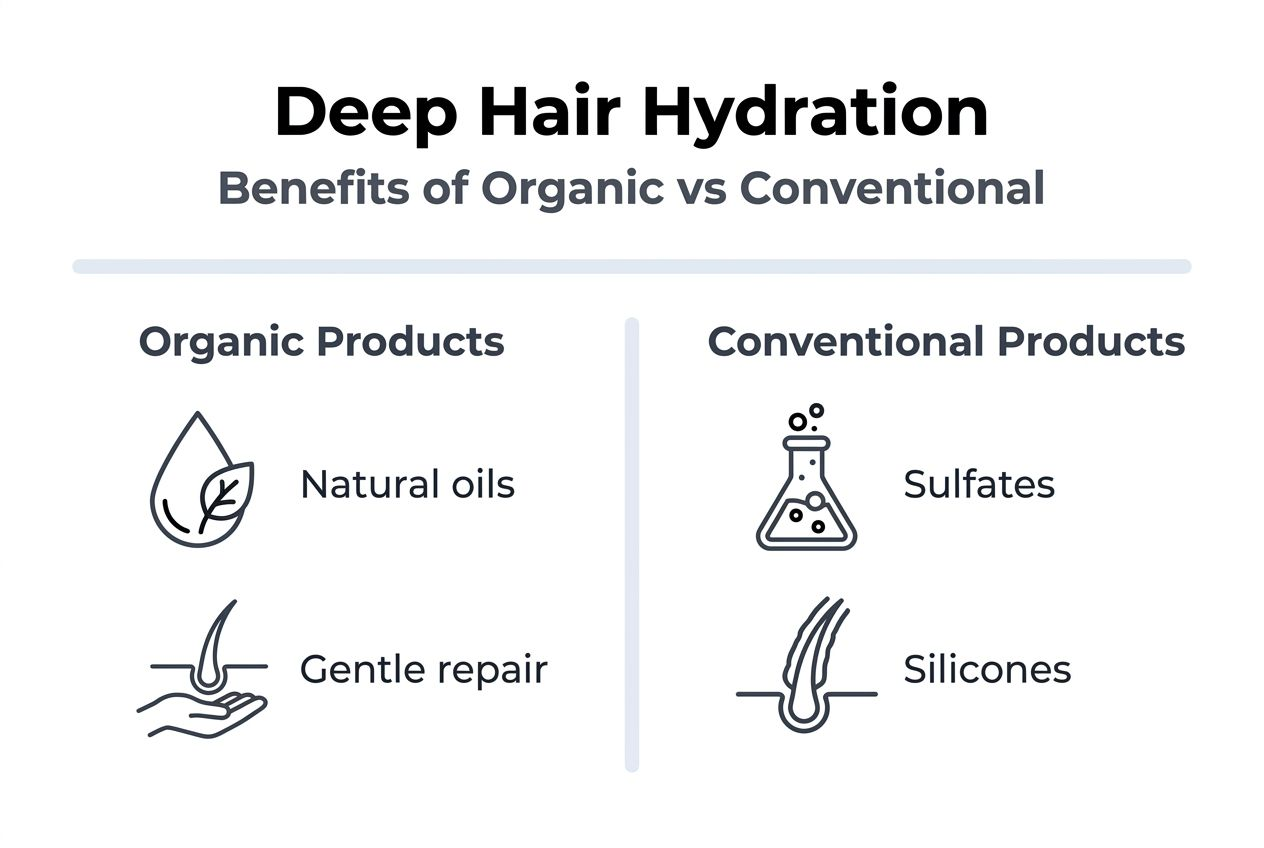
| Feature | Organic Products | Conventional Products |
|---|---|---|
| Primary ingredients | Natural oils, plant extracts, botanical ceramides | Synthetic silicones, sulfates, parabens |
| Scalp irritation risk | Low, gentle on sensitive skin | Higher, can cause dryness or allergic reactions |
| Deep hydration mechanism | Penetrates and repairs internal structure | Often coats surface without internal repair |
| pH balance | Typically formulated to match hair’s natural pH | May be alkaline, raising cuticles |
| Long term effects | Cumulative strengthening and improved health | Can cause buildup or progressive damage |
| Suitability | All hair types, especially sensitive or damaged | May work short term but risk long term issues |
Conventional products containing sulfates and parabens can strip your hair’s natural protective oils. Sulfates create rich lather but remove both dirt and beneficial lipids. Over time, this causes dryness, brittleness, and increased breakage. Parabens, used as preservatives, may accumulate in hair follicles and potentially disrupt hormonal balance.
Silicones in conventional products create an illusion of smoothness by coating hair shafts. This coating prevents moisture from penetrating, leading to progressively drier hair underneath. When you stop using silicone products, hair often feels worse because the underlying structure wasn’t repaired.
Organic products suit sensitive scalps particularly well because they avoid common irritants. People with eczema, psoriasis, or contact dermatitis benefit from formulations free of synthetic fragrances and harsh preservatives. These conditions worsen with conventional products that inflame already sensitive skin.
Recommended organic product types by hair condition:
For a complete approach, follow a healthy hair routine checklist focused on hydration, growth, and shine. Consistent use of appropriate products creates lasting improvements.
Selecting the right deep hydration products requires evaluating several key factors. Look for formulations that match your hair’s specific needs while avoiding ingredients that cause buildup or damage.
Product selection criteria:
Key hydrating ingredients to prioritize include ceramides for lipid layer repair, hyaluronic acid for moisture binding, niacinamide for scalp health, argan oil for penetrating moisture, and shea butter for sealing and protecting.
Pro Tip: Apply deep treatments from mid-length to ends first, then work remaining product into roots to avoid weighing down hair at the scalp.
Step-by-step hydration routine:
Application tips focus on maximizing penetration. Apply products to damp, not dripping wet, hair so water doesn’t dilute active ingredients. Use a wide-tooth comb to distribute products evenly through strands. Cover hair with a shower cap during deep treatments to trap heat and enhance absorption.
Deep conditioning with organic oils reduces frizz and improves curl definition by maintaining moisture balance. For curly hair, the squish to condish method works particularly well by encouraging product penetration while enhancing natural curl pattern.
Learn how to keep your hair hydrated with hydrating shampoo as your foundation. The right cleanser removes buildup without stripping protective oils. Following healthy hair care steps for less damage and hydration creates measurable improvements in hair strength and appearance.
Consistent use is essential. Hair improvements accumulate over weeks as damaged areas repair and new growth emerges healthier. Track changes in texture, elasticity, and shine to evaluate product effectiveness.
Deep hydration transforms hair health by penetrating beyond the surface to repair internal structure. This approach differs fundamentally from superficial conditioning that only temporarily smooths hair. When moisture and nutrients reach the cortex, they rebuild protein bonds and lipid layers that give hair its strength.
Organic, chemical-free products support both scalp and hair vitality through gentle, effective ingredients. Natural oils, ceramides, and botanical extracts work with your hair’s biochemistry to restore balance. These formulations avoid harsh additives that strip moisture or cause irritation over time.
Adopting consistent, clean hydration practices means selecting well formulated products and using them correctly. Apply deep treatments regularly, maintain proper scalp pH, and avoid overwashing. These steps lead to improved moisture retention, reduced breakage, and enhanced natural shine.
Understanding the science behind hair hydration for growth and shine empowers you to make informed choices. Your hair responds to thoughtful care with visible improvements in health, strength, and appearance.
Transform your hair care routine with products formulated specifically for deep internal hydration. Our organic line features ceramides, hyaluronic acid, and natural oils that penetrate hair shafts to repair and strengthen from within. Each product maintains optimal pH balance while avoiding salt, parabens, sulfates, and silicone.
Discover our hydrating shampoo and conditioner duo that cleanses gently while delivering intensive moisture. For targeted treatment, try our hydrating conditioner with concentrated botanicals. Complete your routine with leave-in moisturizing treatment for all day protection and shine.
Deep hair hydration delivers moisture and nutrients into the hair cortex, not just the surface. This internal repair restores elasticity, strength, and natural shine by rebuilding damaged protein bonds and lipid layers.
No, all substances are chemicals by definition, including water and natural oils. Chemical-free typically means free from harsh synthetic additives. Ingredient biochemistry determines safety and effectiveness, not whether something is natural or synthetic.
Use deep hydration treatments 1-2 times per week depending on your hair’s condition and type. Damaged, curly, or color treated hair may need twice weekly treatments, while healthy hair maintains moisture with weekly applications. Consistent use provides sustained moisture and progressive damage repair.
Ceramides rebuild internal lipid barriers, hyaluronic acid binds water molecules, and niacinamide improves scalp circulation. Natural oils like argan and shea butter penetrate deeply while sealing cuticles. These ingredients work together to enhance moisture retention, elasticity, and follicle nourishment.
WhatsApp: 347-241-9558


 USD
USD EUR
EUR
 AUD
AUD
 GBP
GBP
 JPY
JPY
 INR
INR