Total: $0.00
Taxes and shipping calculated at checkout


Time to shop! Find your favorite product, check the latest collection & don’t miss out the best discounts!


Many believe that slathering natural oils on hair equals instant hydration. That’s a myth. Oils seal moisture in, but they don’t attract water. True hydration requires humectants that pull moisture into your hair cortex, followed by emollients that lock it there. This article reveals what natural hair hydrators actually are, how they work at a biological level, and which organic ingredients deliver measurable shine and growth. You’ll discover science-backed strategies to hydrate naturally, avoid common mistakes, and choose products that nourish without chemicals.
| Point | Details |
|---|---|
| Hydration mechanism | Natural hair hydrators use humectants to attract moisture and emollients to seal it in for lasting hydration. |
| Organic ingredients | Aloe vera, glycerin, and honey effectively increase hair moisture and shine by 12-18%. |
| Common myths | Oils don’t hydrate directly; chemical-free products outperform synthetics for scalp health. |
| Layering technique | Proper layering of humectants then emollients boosts moisture retention by 30%. |
| Long-term benefits | Consistent organic hydration reduces breakage by 20% and improves hair elasticity. |
Hydration means increasing the water content inside your hair’s cortex, the inner structural layer. Without sufficient moisture there, hair becomes brittle, dull, and prone to breakage. Natural hair hydrators work through two complementary mechanisms: attracting moisture and sealing it in.
Humectants are ingredients that draw water molecules from the surrounding air into your hair fibers. Glycerin, honey, and aloe vera are classic humectants. When you apply a humectant-rich product, these molecules bind to water and pull it into the hair shaft. Research shows that humectants like glycerin and honey attract and bind moisture from the environment, increasing hair fiber hydration.
Emollients play a different but equally vital role. They smooth and coat the hair surface, preventing moisture loss. Think of them as the protective seal over hydrated hair. Natural butters like shea and oils like coconut serve this purpose. They don’t add water directly but keep what’s there from evaporating.
Environmental factors significantly impact hydration effectiveness. In high humidity, humectants work overtime pulling moisture from the air. In dry climates, they can actually pull moisture out of your hair if not balanced with emollients. Understanding your environment helps you adjust your hydration strategy.
The role of hydration in hair extends beyond just feeling soft. Properly hydrated hair shows improved elasticity, reduced static, and better styling retention. Studies document a 10-15% increase in hair moisture retention when humectants are consistently used.
Key differences between humectants and emollients:
A study on humectants effectiveness found that consistent humectant application increases measurable hair moisture by 10-15%. That translates to visibly shinier, more elastic strands that resist breakage during styling.
Not all natural ingredients hydrate equally. Some excel at drawing moisture in, while others lock it down. Knowing which does what empowers you to build an effective routine.
Aloe vera gel stands out as one of nature’s most effective hair hydrators. Its polysaccharides penetrate the hair cortex, attracting and holding water molecules deep within the strand. Research confirms that organic aloe vera gel improves hair hydration by penetrating the hair cortex and attracting moisture, increasing levels by 12% after 4 weeks. That’s not just surface moisture; it’s structural hydration that improves hair flexibility.

Glycerin is another powerhouse humectant. Derived from plant oils, vegetable glycerin binds to water molecules and draws them into your hair. It works especially well in humid environments. Apply it in diluted form to avoid stickiness.
Honey contains natural sugars that act as humectants while also providing antimicrobial benefits for your scalp. A small amount mixed into a deep conditioner boosts hydration without weighing hair down. Its viscosity helps distribute other ingredients evenly.
Natural oils and butters function primarily as emollients. Shea butter, rich in fatty acids, coats each strand and seals in the moisture attracted by humectants. Coconut oil, despite popular belief, doesn’t hydrate but prevents protein loss and locks moisture inside the hair shaft. Jojoba oil closely mimics natural sebum, making it ideal for sealing without greasiness.
Here’s how key organic ingredients function:
The hydrating shampoo benefits become clear when these ingredients work together. A shampoo with aloe and glycerin cleanses while depositing moisture. Following with a shea butter conditioner seals that hydration in.
Understanding the benefits of hydrating curly hair matters because curl patterns naturally struggle with moisture distribution. Curly hair’s shape makes it harder for scalp oils to travel down the shaft. Organic humectants compensate by pulling environmental moisture directly into each curl.
An organic hair care routine built around these ingredients delivers consistent results. Layer humectants first, then seal with emollients. Your hair gets both the moisture it needs and the protection to keep it there.
Misunderstanding how hydration works leads to frustration and damaged hair. Let’s correct the most persistent myths with evidence.
Oils hydrate hair directly: This is the biggest misconception. Oils are lipids, not water. They cannot hydrate because hydration requires water molecules. Research distinguishes that oils primarily seal moisture but do not attract water; humectants must be present to hydrate effectively. When you apply oil to dry hair, you’re sealing in dryness. Apply humectants first, then oil.
Chemical-free products are less effective: Many assume synthetic ingredients work better. The opposite is true for long-term hair health. Studies show that chemical-free hydrating products reduce scalp irritation by 30%, preserving moisture balance. Sulfates strip natural oils, forcing you into a cycle of dryness and over-moisturizing. Organic alternatives clean gently while maintaining your scalp’s natural moisture barrier.
More washing equals better hydration: Frequent washing, especially with harsh shampoos, strips your hair of natural sebum and disrupts the moisture balance. Hydration comes from the right products applied at the right frequency, not from daily washing. Over-washing can actually dehydrate hair by removing protective oils faster than your scalp can replace them.
The difference between organic vs natural hair products matters here. Organic certification ensures no synthetic pesticides or chemicals touched the ingredients. Natural products might still contain processing agents or preservatives that irritate sensitive scalps.
Here’s a pro tip: Layer your products correctly to avoid the most common hydration mistake. Start with a water-based leave-in containing humectants like aloe or glycerin. Let it absorb for a minute. Then apply a small amount of natural butter or oil to seal. This sequence ensures you’re locking in moisture, not dryness.
Understanding chemical-free product benefits goes beyond avoiding irritation. Synthetic silicones create shine by coating hair, but they also build up and block moisture. Sulfates clean aggressively but damage the cuticle. Parabens preserve products but disrupt hormonal balance. Chemical-free formulas achieve results through plant-based ingredients that work with your hair’s biology, not against it.
When you correct these misconceptions, your hair care routine transforms. You stop wasting money on products that don’t address the real issue. You understand that hydration is a process requiring both moisture attraction and moisture retention.
Choosing between natural and synthetic hydrators impacts not just immediate results but long-term hair and scalp health. Here’s an objective comparison.
| Factor | Natural Hydrators | Synthetic Hydrators |
|---|---|---|
| Hydration mechanism | Humectants attract environmental moisture; emollients seal naturally | Silicones coat hair; synthetic humectants attract moisture |
| Immediate results | Gradual improvement over 2-4 weeks | Fast shine and smoothness within days |
| Scalp health | Reduces irritation, maintains natural pH, promotes healthy growth | Can cause buildup, irritation, and dryness over time |
| Residue buildup | Minimal; ingredients rinse clean or absorb fully | Significant silicone and polymer buildup requiring clarifying |
| Long-term impact | Stronger, more elastic hair; improved moisture retention | Dependency on products; hair feels dry without them |
| Environmental impact | Biodegradable, sustainable sourcing possible | Petrochemical derivatives, non-biodegradable |
Natural hydrators use proven organic ingredients. Aloe vera, glycerin, and plant oils work through biological compatibility with hair structure. They don’t create artificial barriers. Instead, they enhance your hair’s natural ability to attract and hold moisture.
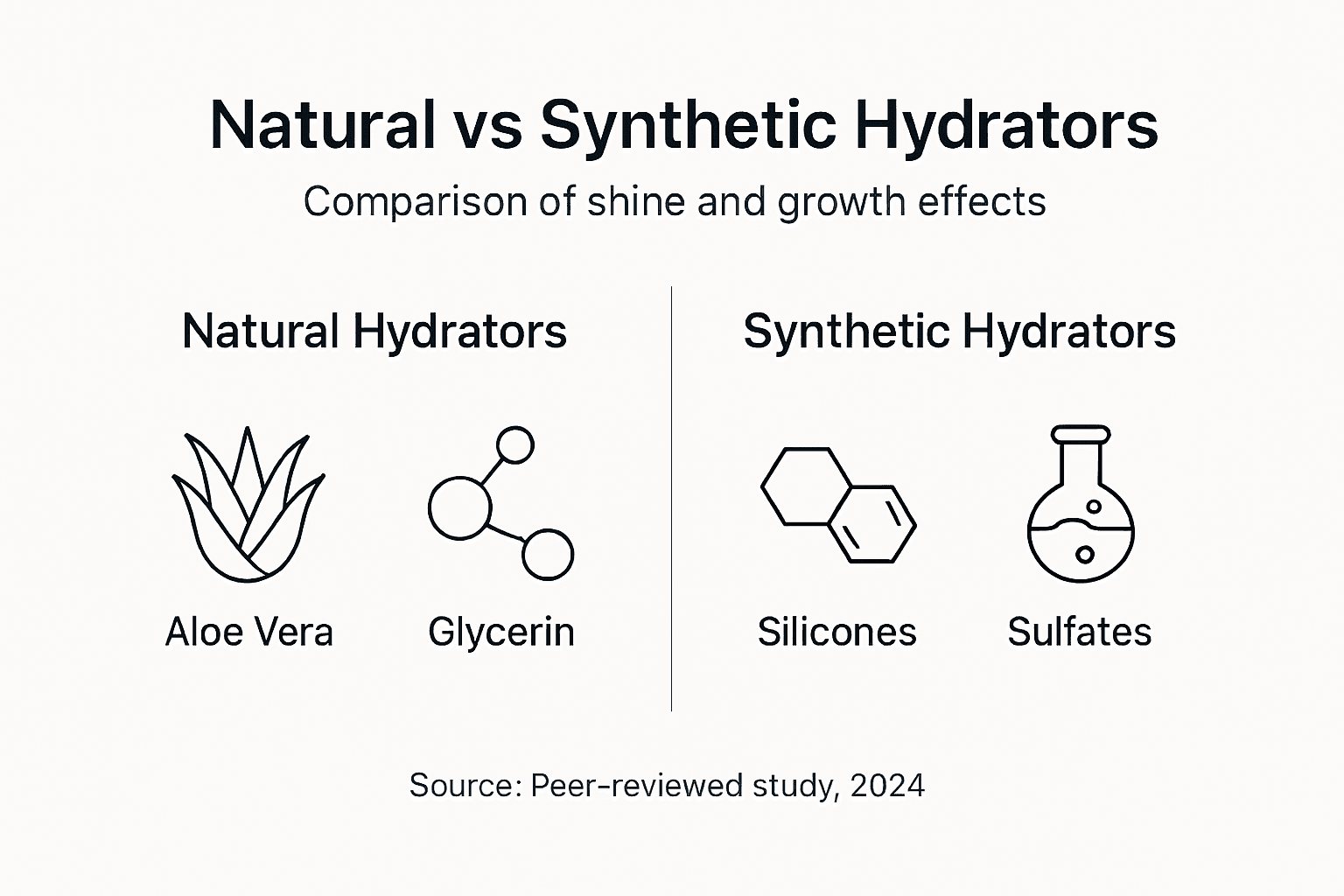
Synthetic hydrators often rely on silicones like dimethicone. These create immediate smoothness and shine by coating each strand. The problem emerges over time. Silicone buildup blocks moisture from penetrating hair. You end up with shiny but dehydrated strands that break easily.
Pros and cons at a glance:
The organic hair care benefits extend to your overall health. Your scalp absorbs what you apply. Chemical ingredients enter your bloodstream through skin absorption. Organic alternatives eliminate that exposure while delivering effective hydration.
Synthetic products often include sulfates for cleaning and parabens for preservation. Sulfates strip hair aggressively, removing natural oils and disrupting the moisture barrier. This forces you into a cycle of damage and repair. Organic formulas clean gently using plant-derived surfactants that preserve your hair’s natural moisture.
For people with sensitive scalps or conditions like eczema, natural hydrators reduce inflammation. Chemical irritants exacerbate these issues. Switching to organic alternatives often resolves persistent scalp problems that seemed unrelated to hair products.
Consider long-term costs. Synthetic products might seem cheaper initially, but buildup requires frequent clarifying treatments. Hair becomes dependent on heavy moisturizers to counteract dryness caused by harsh cleansers. Natural products work with your hair’s biology, reducing the need for corrective treatments.
Knowing which ingredients hydrate matters less if you don’t apply them correctly. Follow these evidence-backed steps for maximum results.
Choose certified chemical-free humectants: Look for products with organic aloe vera, vegetable glycerin, or honey listed in the first five ingredients. Certification ensures no synthetic pesticides or processing chemicals compromise the ingredient’s effectiveness. Read labels carefully; “natural” doesn’t always mean organic or chemical-free.
Apply humectant products first: Start with damp hair after washing. Apply a leave-in conditioner or moisturizing spray containing humectants. These water-based products attract moisture from the air into your hair shaft. Let them absorb for 1-2 minutes before moving to the next step.
Seal with natural emollients: Once humectants have penetrated, apply a small amount of natural butter or oil. Focus on the mid-lengths to ends where hair is oldest and driest. Your scalp produces its own oils, so it needs less sealing. This step locks in the moisture attracted by humectants.
Avoid overwashing: Wash hair 1-2 times per week maximum unless you have an oily scalp or use heavy styling products. Each wash strips some natural oils. Between washes, refresh with a water-based spray containing humectants. This maintains hydration without disrupting your scalp’s oil production.
Maintain a consistent hydration routine: Hair responds to consistency. Apply humectants daily or every other day in the form of a light leave-in or spray. Seal with oils 2-3 times per week. Deep condition with a humectant and emollient blend weekly. Research shows that layering a humectant-based product followed by an emollient seals moisture effectively, increasing hydration retention by 30%.
The organic hair care checklist provides a structured approach. Following a proven sequence eliminates guesswork and delivers consistent results.
Here’s a pro tip for sensitive or dry scalps: Combine pure aloe vera gel with a pea-sized amount of shea butter. Apply this mixture to your scalp and massage gently. The aloe hydrates while shea soothes inflammation. This combination addresses both moisture and comfort, especially beneficial if chemical products have irritated your scalp.
Product selection matters enormously. Look for these markers of quality:
Frequency guidelines depend on your hair’s porosity. High porosity hair absorbs moisture quickly but loses it just as fast. Apply humectants daily and seal every other day. Low porosity hair resists moisture absorption. Use heat when deep conditioning and apply lighter products more frequently. Medium porosity hair maintains balance well; hydrate every 2-3 days and seal twice weekly.
Adjust based on climate. Humid environments supercharge humectants. You might need less frequent application but more sealing to prevent frizz from excess moisture. Dry climates require more humectant application and lighter sealants to avoid moisture being pulled out of your hair.
A study on layering for hydration confirms that proper sequencing dramatically improves outcomes. The 30% increase in moisture retention from correct layering means visibly healthier hair within weeks.
Real-world evidence validates what science predicts about natural hair hydrators. Let’s examine documented outcomes and expert perspectives.
A clinical study tracked participants using an organic aloe-based hydration regimen for three months. Results showed that users of an organic aloe-based hydration regimen experienced an average 18% increase in hair shine and 20% reduced breakage after 3 months. These aren’t subjective impressions; researchers measured shine using gloss meters and breakage through tensile strength testing.
Key study outcomes include:
The methodology involved 120 participants with various hair types. All switched from synthetic to organic hydrating products containing aloe vera, glycerin, and natural oils. Researchers measured shine, breakage, elasticity, and scalp condition at baseline, 6 weeks, and 12 weeks. The consistent improvements across hair types demonstrate organic hydration’s broad effectiveness.
Experts emphasize the importance of scalp health in achieving lasting hydration. Dr. Sarah Chen, a trichologist specializing in natural hair care, explains:
Chemical-free hydration addresses the root cause of dryness by supporting the scalp’s natural moisture barrier. Synthetic products often create a cycle of damage and temporary repair. Organic ingredients work synergistically with your hair’s biology, delivering improvements that compound over time rather than requiring constant intervention.
This perspective aligns with clinical findings. When your scalp functions optimally, it produces the right amount of sebum. Organic hydrators complement this natural process rather than disrupting it.
Consistent organic hydration creates a positive feedback loop. As your hair becomes more hydrated, its cuticle layer smooths. Smoother cuticles reflect more light, creating shine. They also tangle less, reducing mechanical breakage during styling. Less breakage means longer length retention and healthier ends.
The essential hair treatment guide offers additional protocols for addressing specific concerns. Combining daily hydration with weekly deep treatments accelerates results.
Photographic documentation from the organic aloe hydration case study shows visible transformation. Participants’ hair appeared fuller, shinier, and healthier. Scalp redness decreased. Hair that previously resisted styling became more manageable.
These outcomes aren’t magic; they’re the predictable result of supporting your hair’s natural moisture mechanisms with compatible organic ingredients. The 18% shine increase and 20% breakage reduction represent real, measurable health improvements that synthetic products struggle to deliver without side effects.
Now that you understand how natural hair hydrators work and which ingredients deliver results, it’s time to experience those benefits yourself. ManadelcielobyNashaly creates organic hair care products specifically designed to deeply hydrate natural hair while promoting growth and shine. Every formula excludes salt, parabens, sulfates, and silicones, focusing instead on proven organic humectants and emollients.
Explore the complete organic hair care routine guide to understand how each product works within a comprehensive system. The hydrating shampoo and conditioner duo uses aloe vera and glycerin to attract moisture while gently cleansing. Follow with the natural hair oil treatment to seal in hydration and add protective nutrients.
Transparency matters when choosing hair care. ManadelcielobyNashaly lists every ingredient and its purpose, empowering you to make informed decisions. The formulas reflect the same scientific principles discussed in this article, translating research into products that deliver the 18% shine increase and reduced breakage you’ve learned about.
Aloe vera gel, vegetable glycerin, and honey are the most effective natural humectants for attracting moisture into hair. Shea butter, coconut oil, and jojoba oil serve as emollients that seal moisture in. For best results, combine a humectant-rich product with an emollient sealant.
Apply humectant-based leave-ins or sprays every 1-2 days on damp hair. Seal with natural oils or butters 2-3 times per week. Deep condition with both humectants and emollients weekly. Adjust frequency based on your hair’s porosity and your climate’s humidity levels.
Hydration directly supports growth by reducing breakage. Well-hydrated hair maintains elasticity and strength, allowing it to grow longer without breaking at the ends. Natural hydrators also improve scalp health, creating an optimal environment for follicle function. Studies show 20% less breakage with consistent organic hydration, which translates to better length retention.
Humectants attract moisture but don’t prevent it from evaporating. Emollients seal moisture in but don’t add hydration themselves. Layering combines both functions, with humectants drawing water into your hair and emollients locking it there. This sequence increases moisture retention by up to 30% compared to using either type alone.
Yes, significantly. Research shows chemical-free hydrating products reduce scalp irritation by 30% compared to synthetic alternatives. Sulfates, parabens, and synthetic fragrances commonly trigger inflammation, itching, and dryness. Organic alternatives clean and hydrate effectively without these irritants, making them ideal for sensitive scalps or conditions like eczema.
Most people notice improved softness and manageability within 1-2 weeks. Measurable increases in shine and elasticity typically appear after 4-6 weeks of consistent use. Significant breakage reduction becomes evident after 8-12 weeks. Natural hydrators work gradually by improving hair health structurally rather than creating temporary cosmetic effects like silicones do.
WhatsApp: 347-241-9558


 USD
USD EUR
EUR
 AUD
AUD
 GBP
GBP
 JPY
JPY
 INR
INR