Total: $0.00
Taxes and shipping calculated at checkout


Time to shop! Find your favorite product, check the latest collection & don’t miss out the best discounts!


Most people assume achieving thicker, healthier hair requires harsh chemical treatments, but emerging research reveals a different story. Organic essentials like rosemary oil, biotin, and castor oil deliver clinically proven results comparable to synthetic options without the side effects. Understanding how hair grows in natural cycles and which nutrients support those phases empowers you to make informed choices. This guide explores the science behind hair growth cycles, essential nutrients and botanicals, and practical routines to promote natural hair growth in 2026.
| Point | Details |
|---|---|
| Hair grows in cycles | Anagen, catagen, telogen, and exogen phases determine growth and shedding patterns. |
| Nutrients are critical | Biotin, iron, zinc, and vitamins A, C, D, E support follicle health and keratin production. |
| Organic oils rival chemicals | Rosemary and castor oils improve density comparable to minoxidil without irritation. |
| Consistency drives results | Combining internal supplements with topical treatments over 3 to 6 months yields measurable improvements. |
| Scalp health matters | Proper circulation, hydration, and pH balance create optimal conditions for growth. |
Hair growth occurs in cycles: anagen (growth), catagen (transition), telogen (rest), and exogen (shedding). The anagen phase lasts 2 to 7 years and accounts for 85 to 90% of your hair. During this active growth period, follicles produce new cells that push hair upward. The catagen phase follows, lasting 2 to 3 weeks as follicles shrink and detach from blood supply.
Telogen is a resting phase lasting about 3 months, during which hair remains in place but stops growing. Exogen marks the shedding stage when old hair falls out to make room for new growth. Disruptions to these phases, caused by poor nutrition, chronic stress, or hormonal imbalances, push hairs prematurely into telogen or shorten anagen. This leads to visible thinning or excessive shedding.
Maintaining and prolonging the anagen phase is essential for healthy hair density. Essentials like biotin, iron, and zinc nourish follicles at the cellular level, ensuring they remain anchored in the growth phase longer. Topical botanicals improve scalp circulation, delivering oxygen and nutrients directly to follicle roots. Without adequate support, follicles enter telogen early, resulting in weaker, shorter hair strands.
Common causes of premature telogen phase entry include:
Understanding these cycles helps you identify where your healthy hair routine needs adjustment. For deeper insight into hair growth cycles, explore how each phase responds to targeted interventions. After grasping hair’s natural cycle, you’ll see why specific nutrients and products are essential next.
Biotin promotes keratin production; iron and zinc deliver oxygen and nutrients; vitamins A, C, D, E, and B12 support follicle health and antioxidant protection. Deficiencies in these nutrients cause thinning and increased shedding. Biotin strengthens hair shafts by enhancing protein synthesis. Iron carries oxygen to follicles, preventing brittle strands. Zinc regulates oil production and repairs tissue damage.

Vitamin A promotes cell turnover, while vitamin C builds collagen and protects against oxidative stress. Vitamin D activates growth receptors in follicles, and vitamin E improves scalp circulation. B12 supports red blood cell formation, ensuring nutrients reach hair roots efficiently. Without these building blocks, hair becomes weak, dull, and prone to breakage.
Botanicals act topically to enhance growth cycles. Rosemary oil’s efficacy equals 2% minoxidil by improving scalp circulation; castor and black seed oils nourish follicles; peppermint and aloe soothe and boost blood flow. Rosemary oil stimulates microcirculation, delivering nutrients directly to follicle roots without the side effects of chemical treatments. Castor oil is rich in ricinoleic acid, which penetrates deeply to strengthen hair shafts.
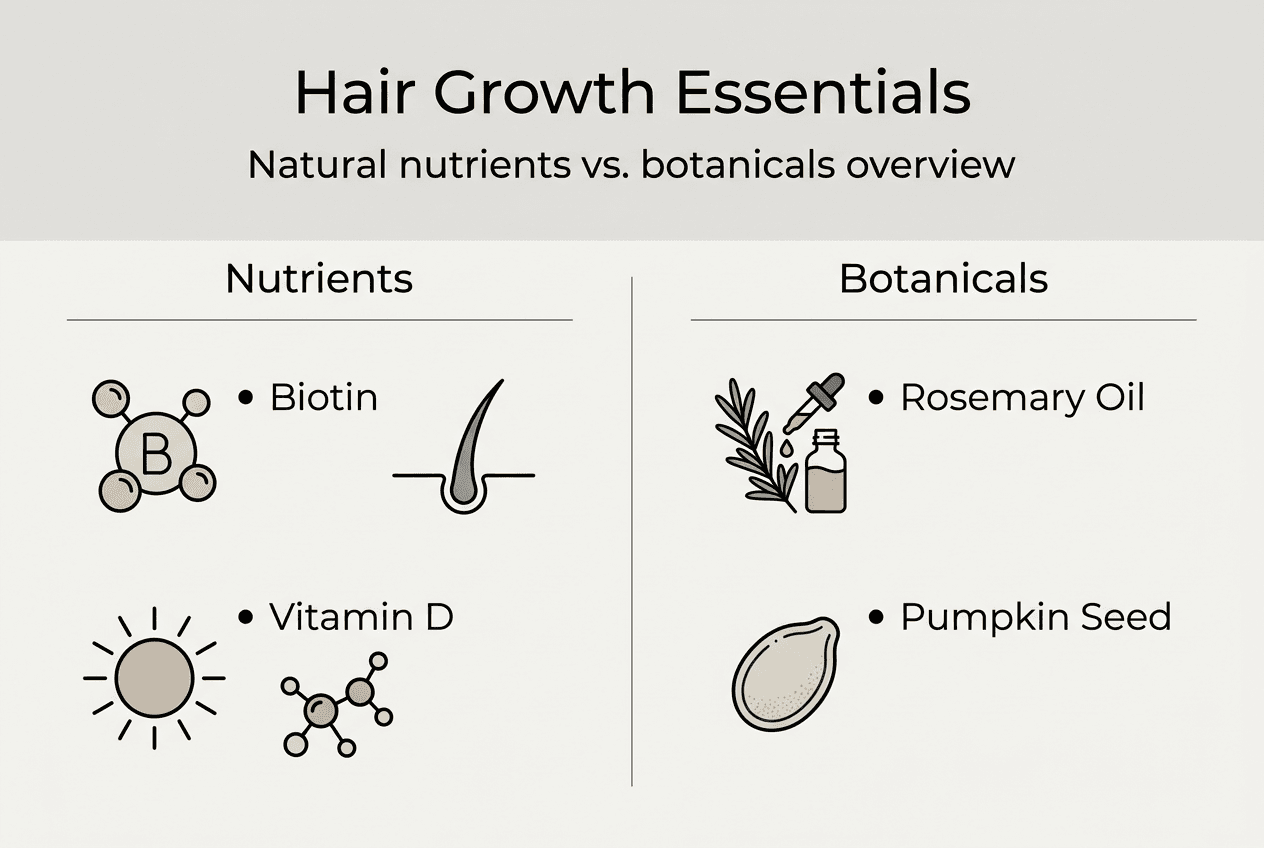
Black seed oil contains thymoquinone, an anti-inflammatory compound that protects follicles from damage. Peppermint oil creates a cooling sensation that increases blood flow, while aloe vera soothes irritation and balances scalp pH. Jojoba oil mimics natural sebum, preventing dryness without clogging pores. These botanicals work synergistically to create an optimal environment for hair growth.
Key botanicals and their roles:
Pro Tip: Combine oral nutrient support with topical botanicals consistently for at least 3 to 6 months to see measurable hair density improvements. Track progress with photos and measurements to identify which combinations work best for your hair type. For more on how essential oils boost growth, explore targeted application techniques. Understanding the difference between organic vs natural products helps you choose the cleanest options for your routine.
Botanical treatments like rosemary and pumpkin seed oil match efficacy of minoxidil with better tolerability and no side effects; chemical products act faster but may cause irritation or disrupt scalp biology long term. Minoxidil and finasteride deliver quicker visible results, often within 3 to 4 months, by forcing follicles into anagen phase. However, these treatments can cause scalp dryness, itching, and dependency, meaning hair loss resumes if you stop using them.
Botanical alternatives take slightly longer, typically 4 to 6 months, but offer sustainable improvements without adverse effects. Rosemary oil increases hair count by stimulating circulation naturally, while pumpkin seed oil blocks DHT, a hormone linked to hair thinning. These natural options support scalp health holistically, reducing inflammation and balancing sebum production. Chemical treatments often disrupt the scalp’s natural microbiome, leading to long term sensitivity.
| Treatment Type | Effectiveness | Side Effects | Cost | Maintenance |
|---|---|---|---|---|
| Minoxidil | High, 3 to 4 months | Scalp irritation, dependency | Moderate | Daily application required |
| Finasteride | High, 3 to 6 months | Hormonal side effects | High | Daily oral medication |
| Rosemary oil | Comparable, 4 to 6 months | None reported | Low | 2 to 3 times weekly |
| Pumpkin seed oil | Moderate, 4 to 6 months | None reported | Low | Daily or weekly |
| Castor oil | Moderate, 4 to 6 months | None reported | Very low | 2 to 3 times weekly |
Chemical treatments pros and cons:
Botanical treatments pros and cons:
Pro Tip: Test key biomarkers like ferritin, DHT, and vitamin D levels, and assess hair porosity to choose tailored hair growth essentials and avoid common pitfalls. Blood tests reveal nutrient deficiencies that botanicals alone cannot address. Knowing your DHT levels helps you decide if blocking agents like pumpkin seed oil are necessary. Hair porosity testing determines how well your strands absorb topical treatments, guiding product selection. For a comprehensive approach, explore organic hair care types in 2026 and review rosemary oil clinical trials for detailed efficacy data.
Consistent use of internal nutraceuticals combined with topical oils and scalp massage improves density and fiber strength over 3 to 6 months. Building a routine requires integrating supplements, topical treatments, and scalp care practices into daily and weekly habits. Start by addressing nutritional gaps with biotin, iron, zinc, and vitamin supplements. Take these with meals to enhance absorption and minimize stomach discomfort.
Apply topical oils 2 to 3 times weekly, focusing on the scalp rather than hair length. Warm the oil slightly to improve penetration, then massage in circular motions for 5 to 10 minutes. This stimulates blood flow and helps active compounds reach follicle roots. Leave the oil on for at least 30 minutes or overnight before washing. Use a sulfate-free hydrating shampoo to cleanse without stripping natural oils.
Step-by-step organic hair growth routine:
Daily and weekly key practices include scalp massage to improve circulation, using sulfate-free products to protect natural oils, and balancing protein treatments per hair type. High porosity hair needs more protein to repair damage, while low porosity hair benefits from moisture-rich treatments. Avoid over-manipulating hair with tight styles or excessive heat, as this causes mechanical breakage.
Common mistakes to avoid:
Hair growth is a gradual process requiring consistency and patience. Follicles respond to sustained nourishment, not quick fixes. Track biomarkers like ferritin and DHT every 3 months to adjust your routine based on data. For a complete guide, explore a natural hair care routine for 2026 and learn about hair hydration, growth, and shine to refine your approach.
After learning how to create your routine, consider enhancing it with specialized organic products crafted by experts. ManadelcielobyNashaly offers a curated line of organic hair care solutions designed to support natural growth and hydration with clean, chemical-free ingredients. The Hydrating Shampoo & Conditioner gently cleanses while preserving your scalp’s natural oils, free of sulfates, parabens, and silicones.

The Hair Oil Treatment combines rosemary, castor, and jojoba oils to nourish follicles and improve circulation, delivering the botanicals discussed in this guide. For a comprehensive approach, the Hair Restoration Hydration Growth Kit includes everything you need to build an effective routine in 2026. These products integrate topical botanicals and support hydration for healthy scalp biology, making it easier to maintain consistency and see results over 3 to 6 months.
Rosemary oil has demonstrated efficacy comparable to 2% minoxidil in promoting hair growth without side effects. It improves scalp circulation, delivering oxygen and nutrients directly to follicle roots. Other supportive oils include castor, black seed, and jojoba for nourishment and scalp health. Castor oil strengthens hair shafts with ricinoleic acid, while black seed oil reduces inflammation. For detailed guidance, explore how essential oils boost hair growth and application techniques.
Consistent use of natural products typically shows visible improvement within 3 to 6 months due to hair growth cycle lag. Hair grows in phases, and new growth must progress through anagen before becoming noticeable. Patience and regular application are essential for best results with organic products. Track progress with photos every 4 weeks to identify subtle changes. Improvements in texture, density, and reduced shedding often appear before length increases.
Deficiencies in nutrients like biotin, iron, zinc, and vitamins correlate strongly with hair thinning and increased shedding. These nutrients support keratin production and follicle function at the cellular level. Without adequate levels, follicles enter telogen phase prematurely, leading to visible hair loss. Ensuring adequate nutrition is a foundational hair growth essential. Blood tests can identify deficiencies, allowing you to address gaps with targeted supplements or dietary changes.
Scalp massage increases blood flow and enhances absorption of growth-promoting oils. Massaging in circular motions for 5 to 10 minutes stimulates microcirculation, delivering oxygen and nutrients to follicle roots. It’s a recommended supportive practice to include in your hair care routine. Massage also reduces stress, which can disrupt hair growth cycles. Use your fingertips, not nails, to avoid irritation, and apply gentle pressure to avoid damaging follicles.
Chemical treatments may cause scalp irritation or disrupt skin biology if used long term, while botanical extracts offer safer profiles for maintenance. Minoxidil and finasteride act faster but can lead to dependency, meaning hair loss resumes if you stop. Botanicals provide effective, gentler alternatives for ongoing hair health without adverse effects. They support scalp biology holistically, reducing inflammation and balancing sebum production. For sustainable results, consider transitioning to organic essentials after achieving initial improvements with chemicals.
WhatsApp: 347-241-9558


 USD
USD EUR
EUR
 AUD
AUD
 GBP
GBP
 JPY
JPY
 INR
INR