Total: $0.00
Taxes and shipping calculated at checkout


Time to shop! Find your favorite product, check the latest collection & don’t miss out the best discounts!


Many people assume vegan hair products can’t match traditional formulas for hydration and growth. That’s a costly mistake. Plant-based ingredients like marula oil and vegan collagen peptides actually deliver superior moisture retention and strand strength without the harmful chemicals found in conventional products. This guide breaks down the science, debunks common myths, and shows you exactly how to transition to vegan hair care for healthier, more vibrant hair.
| Point | Details |
|---|---|
| Chemical-free formulas | Vegan products exclude sulfates, parabens, and silicones that strip natural oils and cause scalp irritation. |
| Plant-based hydration | Natural oils and peptides moisturize deeply while supporting hair growth and reducing breakage. |
| Gradual transition works best | Replace products one at a time and choose formulas matched to your specific hair type for optimal results. |
| Ethical and sustainable | Cruelty-free testing and eco-friendly ingredients support both personal health and environmental protection. |
| Proven effectiveness | Expert testing confirms vegan hair care performs as well or better than traditional chemical-based alternatives. |
Vegan hair products contain zero animal-derived ingredients and undergo no animal testing during development or production. This means no beeswax, keratin from hooves, or lanolin from sheep’s wool. Instead, formulas rely entirely on plant extracts, oils, and synthetic alternatives that replicate beneficial properties without ethical concerns.
These products systematically avoid chemicals that damage hair over time. Vegan shampoos avoid animal-derived ingredients, making them particularly suitable for sensitive scalps prone to allergic reactions. The absence of harsh additives creates gentler cleansing experiences that preserve your hair’s natural protective barriers.
Common harmful chemicals excluded from vegan formulations include:
The ultimate guide to vegan hair care explains how plant-based alternatives deliver comparable or superior performance. Instead of synthetic silicones, formulators use lightweight botanical oils that condition without buildup. Rather than animal keratin, they incorporate plant proteins that repair damaged cuticles naturally.
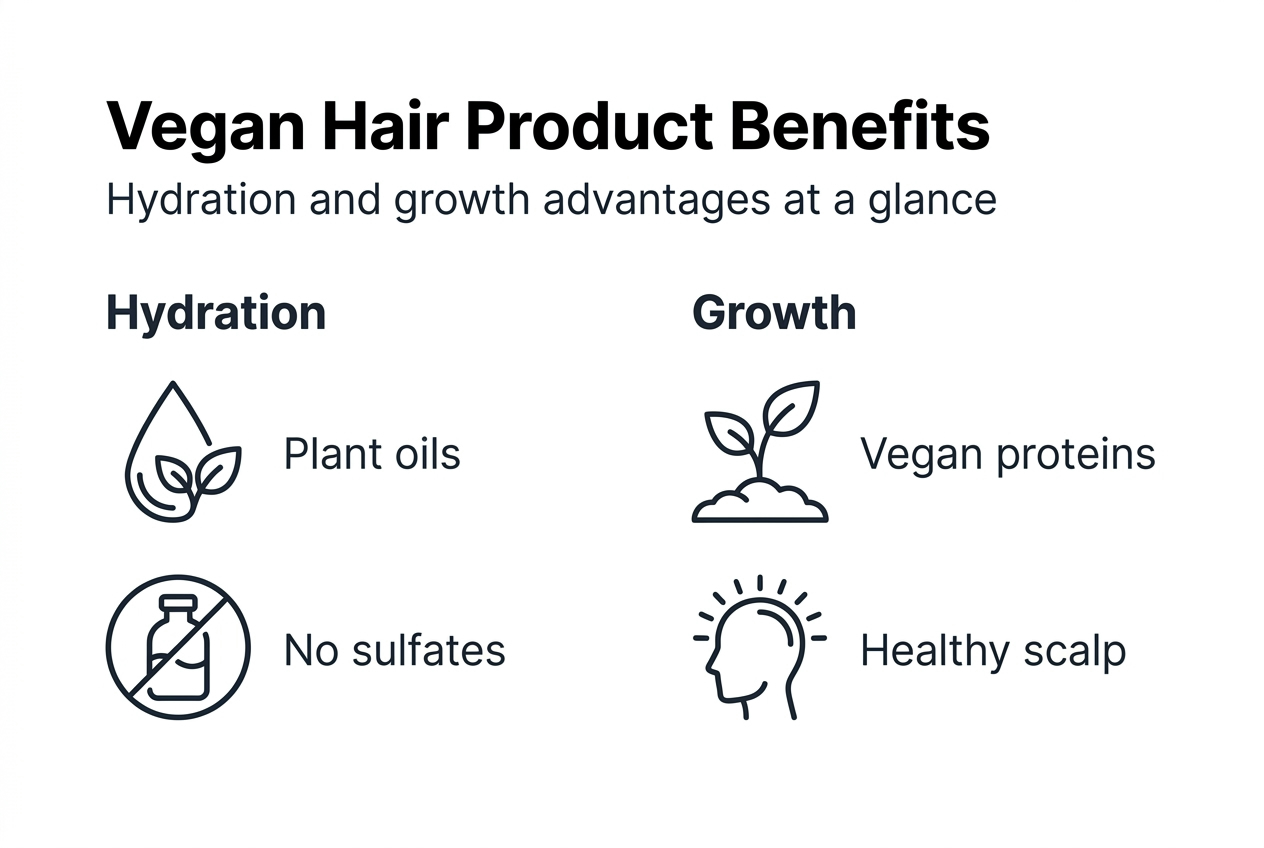
This fundamental shift from chemical-heavy to plant-focused formulations creates the foundation for healthier hair growth and sustained hydration.
Plant-based oils work differently than synthetic moisturizers. Plant-based ingredients like marula oil, coconut oil, and jojoba oil hydrate deeply by penetrating the hair shaft rather than coating the surface. Marula oil contains high concentrations of omega fatty acids that reduce frizz and lock in moisture for days. Coconut oil’s molecular structure allows it to actually enter damaged areas and fill gaps from the inside.
Jojoba oil mimics your scalp’s natural sebum, balancing oil production while delivering vitamins E and B-complex directly to follicles. These nutrients strengthen roots and support the growth phase of your hair cycle. Aloe vera provides additional hydration plus enzymes that remove dead skin cells blocking follicles.

Vegan collagen alternatives represent a major advancement in hair care technology. Scientific testing shows vegan collagen peptides provide intense moisture without the heavy feeling conventional products leave behind. These peptides bind to damaged sections of each strand, essentially patching weak spots before they develop into breaks.
Karmatin serves as another powerful plant-based protein. Vegan hair care products use Karmatin, which nourishes and repairs hair while creating a protective shield against environmental damage. Unlike animal keratin, Karmatin sources from sustainable plants and causes fewer allergic reactions.
Your scalp health directly impacts growth rates. Irritated, inflamed scalps slow the hair growth cycle and may even trigger temporary shedding. Vegan formulas reduce inflammation through soothing botanicals like chamomile and calendula, creating optimal conditions for follicles to function properly.
Pro Tip: Apply the ultimate hair oil for hydration and growth to damp hair, focusing on mid-lengths to ends, then work remaining oil into your scalp with fingertip massage to boost circulation.
| Ingredient Type | Primary Benefit | Hair Types |
|---|---|---|
| Marula Oil | Deep moisture, frizz control | Dry, coarse, curly |
| Coconut Oil | Protein retention, shine | Normal, fine, damaged |
| Jojoba Oil | Sebum balance, scalp health | Oily roots, dry ends |
| Vegan Collagen | Strand repair, elasticity | Weak, brittle, aging |
| Karmatin | Protection, smoothing | All types |
The combined effect of proper hydration and scalp nourishment accelerates visible improvements. Many users notice enhanced hair hydration and growth benefits within the first month of consistent vegan product use.
Sulfates create the satisfying foam you associate with clean hair, but this lather comes at a steep price. These detergents strip your scalp’s natural oils so aggressively that your body overcompensates by producing excess sebum. The cycle of over-washing and over-production leaves hair simultaneously greasy at roots and dry at ends.
Parabens extend product shelf life by preventing bacterial growth. However, research suggests these preservatives may penetrate skin and accumulate in tissue over time. For sensitive scalps, parabens frequently trigger contact dermatitis, redness, and persistent itching that undermines any benefits from other ingredients.
Silicones create an illusion of health by coating each strand in plastic-like polymers. Initially, hair appears shinier and smoother. After several weeks, these coatings build up into waxy layers that repel moisture and nutrients. Your hair becomes increasingly dry underneath while looking deceptively sleek on the surface.
Phthalates hide in ingredient lists under the vague term “fragrance.” These chemicals help scents last longer but may disrupt endocrine function. People with allergies often experience headaches, respiratory irritation, or skin reactions from phthalate exposure during showering.
Vegan formulations sidestep these issues entirely by selecting gentler alternatives:
Using vegan hair products results in stronger, softer, and silkier hair from roots to ends while supporting ethical self-care by avoiding animal testing.
The long-term difference becomes obvious after three to six months. Hair regains its natural texture and movement. Scalp irritation subsides as inflammatory triggers disappear. Breakage decreases because strands maintain flexibility rather than becoming brittle from chemical damage.
Following a healthy hair routine checklist that prioritizes clean, vegan ingredients protects your investment in hair health. You avoid constantly repairing damage caused by the very products meant to improve your appearance.
The belief that plant-based formulas can’t moisturize as effectively as traditional products persists despite mounting evidence to the contrary. Expert reviews confirm comparable or superior performance from vegan shampoos and conditioners across multiple hair types. Laboratory testing shows hydration retention rates match or exceed conventional alternatives.
Another myth suggests vegan hair care only suits people following vegan lifestyles. This misses the point entirely. Anyone seeking healthier hair benefits from avoiding harsh chemicals and prioritizing gentle, effective ingredients. Your dietary choices don’t determine whether plant-based hair care works for you.
Some consumers worry vegan products lack the nourishment needed to support robust growth. The opposite proves true. Concentrated botanicals deliver vitamins, minerals, and fatty acids in bioavailable forms your hair readily absorbs. Synthetic chemicals often provide empty bulk without nutritional value.
Formulation quality matters far more than ingredient origin. A poorly designed vegan product underperforms just as badly as a cheap conventional one. The key lies in selecting brands that invest in research, use clinically tested botanicals, and formulate for specific hair needs rather than generic applications.
Common vegan hair care myths debunked:
Pro Tip: Read beyond marketing claims and examine actual ingredient lists. Look for hydrating oils in the first five ingredients, avoid anything ending in “sulfate,” and verify third-party vegan certification rather than trusting unsubstantiated label claims.
The effectiveness question resolves simply: vegan hair products work because chemistry works. Plant-derived molecules interact with hair structure just as predictably as synthetic ones. The difference lies in gentler action, fewer side effects, and sustainable sourcing that doesn’t compromise performance.
Cruelty-free testing protocols ensure no rabbits, mice, or other animals suffer burns, blindness, or death to validate product safety. Vegan brands use advanced in vitro methods, computer modeling, and human volunteer studies that provide more accurate safety data anyway. Animal testing persists only because outdated regulations haven’t caught up with modern science.
Plant-based ingredient sourcing dramatically reduces environmental footprints compared to animal agriculture. Growing argan trees for oil requires far less water, land, and energy than raising sheep for lanolin. Botanical farms often employ regenerative practices that improve soil health rather than depleting it.
Sustainable harvesting protects ecosystems while supporting local economies. Fair trade certifications ensure workers earn living wages and communities benefit from conservation efforts. When you purchase vegan hair care, your money funds reforestation projects, organic farming initiatives, and biodiversity protection.
Key environmental advantages of vegan formulations:
Choosing vegan aligns with broader ethical consumerism trends. Younger generations increasingly demand transparency about how products impact animals, people, and planet. Brands responding to this pressure drive industry-wide improvements in sustainability standards.
The importance of sustainable hair products extends beyond personal benefits to collective responsibility. Every purchase vote either perpetuates harmful practices or encourages positive change. Vegan hair care lets you maintain your appearance while respecting the interconnected systems that support all life.
Many vegan brands offset remaining carbon emissions, donate portions of profits to environmental causes, and pioneer zero-waste manufacturing. These commitments create measurable positive impacts that compound over time as more consumers make conscious choices.
Assess your current hair situation before purchasing anything. Identify whether you struggle with dryness, oiliness, frizz, thinning, or damage. Check your scalp for sensitivity, flaking, or irritation. This baseline helps you select targeted solutions rather than generic products that may not address your specific concerns.
Transitioning to vegan hair care gradually by replacing one product at a time with plant-based alternatives minimizes adjustment shock. Your scalp and hair adapt more smoothly when changes happen incrementally rather than all at once.
Follow this strategic replacement sequence:
Look for certified vegan and cruelty-free labels from recognized organizations like Leaping Bunny or PETA. These certifications verify claims through independent audits rather than relying on brand self-reporting. Legitimate vegan products display certification logos prominently on packaging.
Match formulations to your hair’s hydration and growth needs. Fine hair requires lightweight oils that won’t cause greasiness. Thick, coarse hair benefits from richer butters and concentrated proteins. Curly textures need extra moisture and anti-frizz ingredients. Color-treated hair demands UV protection and gentle cleansing.
Monitor your hair’s response during the first month. Note changes in texture, manageability, shine, and scalp comfort. Some initial differences simply reflect your hair adjusting to gentler ingredients after years of harsh chemical exposure. True incompatibility shows as persistent problems that worsen over time.
Pro Tip: Patience pays off because improvements often appear gradually over several weeks as damaged cuticles repair and scalp health normalizes. Give each new product at least three weeks before deciding whether it works for you.
The organic hair care routine checklist provides step-by-step guidance for building an effective regimen. Following proven healthy hair care steps helps you achieve 40% less damage and 30% better hydration through proper product selection and application techniques.
Ready to experience the hydration and growth benefits discussed throughout this guide? High-quality vegan formulations make transitioning simple and effective. Start your journey with a hydrating shampoo that gently cleanses while infusing moisture deep into each strand.
For comprehensive care, the hydrating shampoo and conditioner set works synergistically to restore balance and promote healthy growth. These products contain no salt, parabens, sulfates, or silicones, just pure plant-based nourishment your hair craves.
Extend hydration between washes with a leave-in moisturizing product that protects against environmental stress while keeping hair soft and manageable. All formulations align with cruelty-free, ethical standards that respect both your hair and the planet.
Yes, properly formulated vegan products deliver hydration and support across all hair types from fine and straight to thick and curly. The key lies in choosing ingredients suited to your specific needs. Fine hair benefits from lightweight oils, while coarse textures thrive with richer plant butters.
Vegan products eliminate many common irritants including animal-derived proteins, harsh sulfates, and synthetic fragrances that trigger sensitivity. The gentler plant-based formulations often resolve chronic scalp issues within weeks. People with allergies or conditions like eczema typically see significant improvement.
Visible hydration improvements and increased softness often appear within two to four weeks of consistent use. Noticeable growth enhancement and reduced breakage typically require two to three months as your hair completes its natural growth cycle. Patience matters because damaged hair needs time to repair and healthy new growth to emerge.
Vegan products exclude animal-derived substances but may contain safe cosmetic chemicals like preservatives or pH adjusters. The term “vegan” addresses ingredient origin, not chemical composition. Always read ingredient labels to understand specific formulations and ensure they meet your standards for what you want to avoid.
WhatsApp: 347-241-9558


 USD
USD EUR
EUR
 AUD
AUD
 GBP
GBP
 JPY
JPY
 INR
INR