Total: $0.00
Taxes and shipping calculated at checkout


Time to shop! Find your favorite product, check the latest collection & don’t miss out the best discounts!


Finding organic products that truly hydrate and enhance your curls can feel challenging in a world full of synthetic ingredients and urban stressors. Curly hair, according to board-certified dermatologists, is more prone to dryness and breakage, demanding a routine tailored to your specific texture and environment. This guide helps you decode your unique hydration needs, choose safe, effective products, and achieve defined, healthy curls without harmful chemicals, so you can confidently nourish your hair while protecting your well-being.
| Key Message | Explanation |
|---|---|
| 1. Assess your hair’s hydration needs | Examine your curls’ texture and behavior to identify their unique hydration requirements. |
| 2. Choose organic products wisely | Avoid harmful chemicals and opt for certified organic products that nourish without causing buildup. |
| 3. Apply products correctly | Use the right techniques, such as scrunching, to enhance curl definition while maintaining moisture. |
| 4. Regularly evaluate your routine | Monitor changes in your curls to adjust products and techniques for optimal results and shine. |
| 5. Document your hair’s response | Keep a record of your products and methods to identify what works best for your curls over time. |
Your curly hair is unique. The texture, curl pattern, and thickness of your curls determine exactly how much hydration you actually need. Before buying products or starting a routine, you need to understand what your hair is telling you.
Start by examining your curls in natural light without any products. Look at how your curls behave and what they’re missing. Ask yourself these questions:
These signs point to hydration needs. Curly hair’s structure affects moisture distribution, meaning water and moisturizing products don’t travel down your hair shaft as easily as they do for straight hair. The natural oils your scalp produces have a harder time coating curly strands.
Naturally curly hair is more prone to dryness and breakage, which is why personalized assessment matters. Your curl pattern, thickness, and density all play a role in how much hydration your hair needs.
Pay attention to how your curls respond after you wash and condition them. Do they feel soft and bouncy? Do they lose moisture within hours or stay hydrated for days? Understanding this timeline helps you pick the right products and washing frequency for your specific needs.
Your curls tell you what they need—listen to them rather than following someone else’s routine.
Consider your environment too. Urban climates, humidity levels, pollution, and water quality all affect your curl hydration. If you live in a dry climate, your curls will need more intensive moisture than someone in a humid area.
Write down what you observe about your curls. Note the dryness level, frizz behavior, definition quality, and how long moisture lasts. This becomes your baseline for selecting the right organic products and building a hydration routine that actually works for you.
Here’s how different hair environments impact curly hair hydration:
| Environment Factor | Effect on Curls | Hydration Challenge |
|---|---|---|
| Urban pollution | Weakens hair barrier | Increased dryness |
| Hard water | Leaves mineral buildup | Reduces moisture absorption |
| High humidity | Swells hair shaft | Increases frizz risk |
| Dry climate | Pulls moisture from hair | Fast moisture loss |
| Soft water | Easier rinsing, less buildup | May require lighter products |
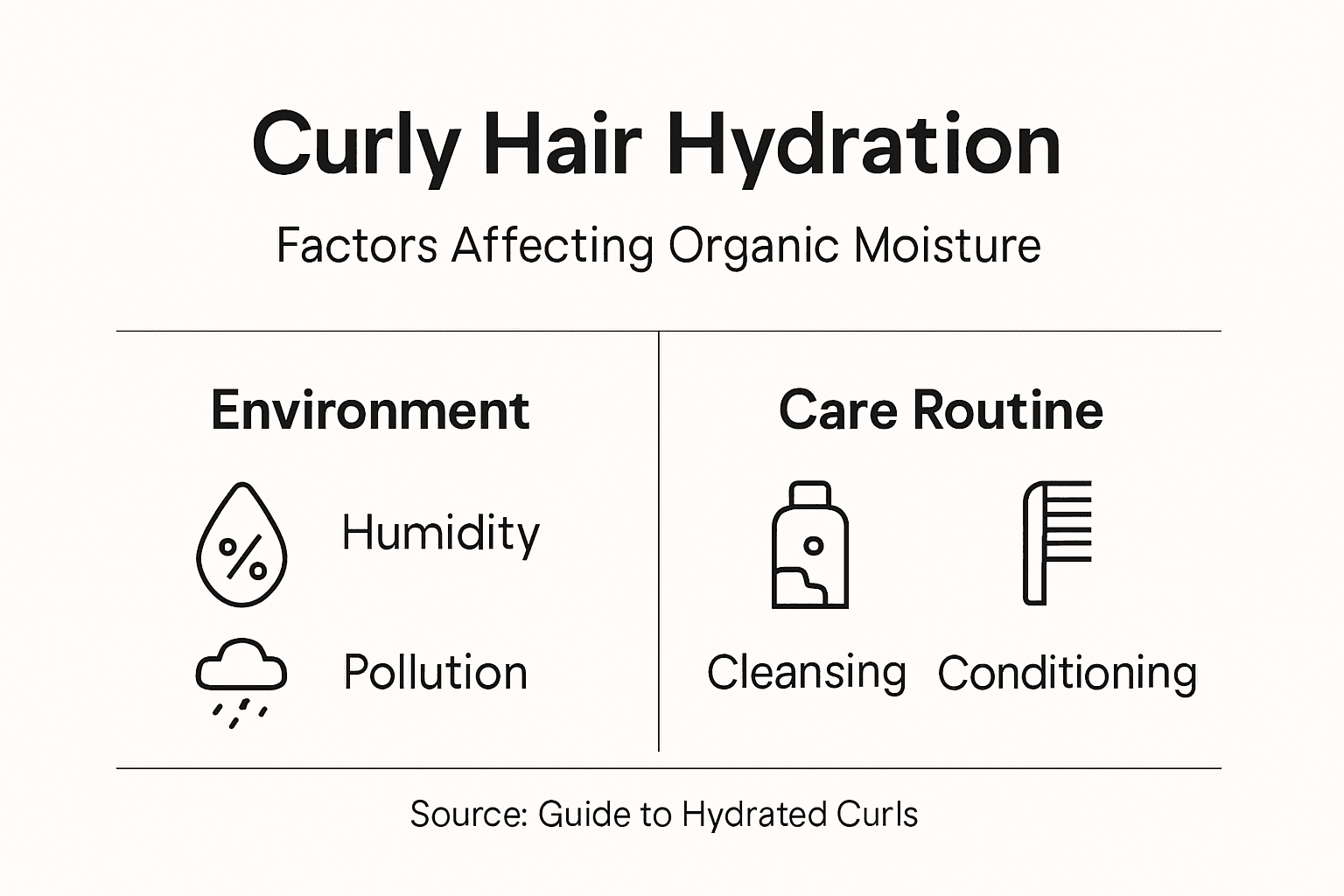
Pro tip: Test your curl’s moisture level by doing the squeeze test: take a wet curl, gently squeeze it between two fingers, and see if water drips out. If it doesn’t, your curls are thirsty and need more hydration before you choose your next product.
Now that you understand your curl’s hydration needs, it’s time to choose products that actually work without compromising your health. Many conventional hair care products contain ingredients that damage curls while exposing you to long-term risks.
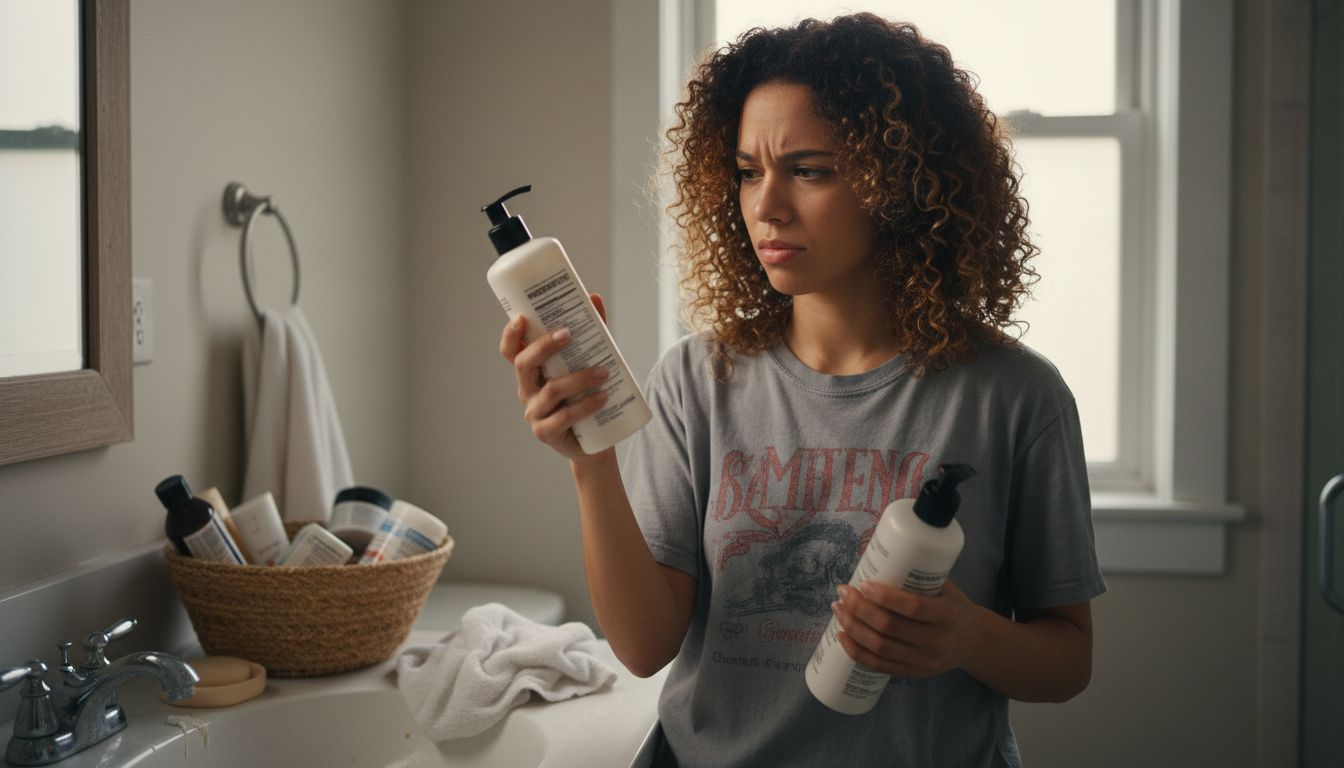
Start by learning what to avoid. Common culprits in mainstream products include sulfates, parabens, synthetic fragrances, and silicones. Sulfates strip natural oils from your curls, leaving them drier than before. Parabens are synthetic preservatives linked to hormone disruption. Silicones provide temporary smoothness but trap moisture and product buildup, eventually making curls heavier and less bouncy.
When shopping, check product labels carefully. Look for these red flags:
Instead, prioritize organic personal care products certified by recognized organizations. These certifications guarantee that formulations use natural ingredients without synthetic chemicals or pesticides. Look for brands that emphasize being free of salt, parabens, sulfates, and silicone—exactly what your curls need.
Products with EWG Verified certification meet strict safety standards and are formulated to reduce exposure to potentially harmful ingredients. This third-party verification takes the guesswork out of shopping and gives you confidence in what you’re applying to your hair.
Read ingredient lists from back to front. The first ingredients should be water or plant-based oils like coconut, argan, or jojoba oil. Avoid products with long, unpronounceable chemical names.
Organic certification isn’t just marketing—it’s a verified commitment to your hair and health.
Start with the basics: a gentle cleanser and a rich conditioner formulated for curly hair. These two products form the foundation of hydration. Once you find organic products that work, you can add treatments like deep conditioning masks or leave-in conditioners.
Don’t assume higher price means better quality. Many affordable organic brands deliver excellent results. What matters is finding products that match your curl type and hydration needs without harsh chemicals.
Compare natural and synthetic hair care approaches for curls:
| Approach | Key Benefits | Main Drawbacks |
|---|---|---|
| Organic Products | Nourish with plant oils | Require careful selection |
| Synthetic Products | Immediate smoothing | Cause buildup, block hydration |
Pro tip: Keep a photo of product labels on your phone so you can quickly cross-reference ingredients when shopping, and build a personal list of brands that work for your curls.
With the right organic products in your arsenal, it’s time to apply them strategically. The way you apply products matters just as much as which ones you choose. Proper application locks in moisture and encourages your natural curl pattern to shine.
Start with damp hair, not soaking wet. Apply products to soaking wet hair and they’ll dilute too much. Apply to hair that’s still wet enough to absorb product but not dripping. This moisture helps products distribute evenly and activate their curl-enhancing ingredients.
Begin with your leave-in conditioner. Apply it section by section, working from the roots toward the ends. Use the praying hands method: sandwich a section of hair between your palms and smooth the product down the hair shaft. This technique helps coat every strand while encouraging curl formation.
Next, apply your curl cream or gel. These products contain moisturizing agents that define and hold curls while reducing frizz. Here’s how to apply them effectively:
The scrunching motion is critical. It encourages your curls to coil and hold their natural pattern. Scrunch upward repeatedly, lifting each curl section toward your scalp. Avoid combing or brushing, which disrupts curl clumping.
Once products are applied, you can use a diffuser attachment on a low-heat setting to speed up drying. This enhances bounce and definition while keeping curls protected from harsh direct heat.
Apply products while your hair is still damp, scrunch upward, and let your curls form their own shape.
Don’t use too much product. Overloading your curls weighs them down and creates a greasy appearance. You want enough product to define curls and reduce frizz, not enough to coat them heavily.
Allow your curls to air dry or diffuse until completely dry before touching them. Touching wet curls disrupts the curl pattern and causes frizz. Once dry, your curls will have set into their defined shape.
Pro tip: Apply a tiny bit of oil or serum to the palm of your hand and smooth it over your curls as a final touch to add shine and tame flyaways without weighing them down.
Your curl routine isn’t set in stone. As seasons change, your hair evolves, and products age, you need to reassess what’s working. Regular check-ins ensure your curls maintain that healthy glow you’re after.
Start by evaluating your results every two to three weeks. Look at your curls in natural light and ask yourself honest questions. Do they look shinier than before you started this routine? Is the frizz noticeably reduced? Are curls holding their definition longer throughout the day?
Pay attention to these specific signs:
If you’re seeing these issues, something needs adjustment. The problem might be washing frequency, product selection, or your application technique. Start by identifying which element feels off.
Over-washing strips natural oils from curls, creating dryness that blocks shine. If you’re washing more than every three days, try extending to every four or five days. Your scalp will adjust and produce healthier natural oils that coat your curls.
Product buildup dulls shine faster than almost anything else. Regular removal of dirt, oil, and product residues keeps hair looking fresh and lustrous. If buildup is the culprit, use a clarifying shampoo once monthly to reset your scalp and strands.
Also assess environmental factors. Did humidity increase? Did you move to a drier climate? Changed jobs with different stress levels? All of these affect your curl’s hydration needs and shine.
Adjust one element at a time so you can clearly see what actually works for your curls.
Keep a simple tracker. Note what products you used, application methods, how your curls looked, and environmental conditions. After three weeks of tracking, patterns emerge showing exactly what boosts shine and what hinders it.
Don’t be afraid to swap products. If something isn’t delivering results after a month of consistent use, it’s not the right fit. Your curls deserve products that actually work for them.
Pro tip: Take monthly photos of your curls in the same lighting and from the same angle to track shine, definition, and overall health—you’ll spot improvements that aren’t always obvious day to day.
Struggling to keep your curls hydrated without harsh chemicals Know that your curls need gentle care free from sulfates parabens silicones and other harmful ingredients Our article highlights the importance of listening to your curl’s unique hydration needs and choosing the right organic products to boost definition and shine If you want to transform your curly hair routine with products that deeply nourish and respect your hair’s natural texture explore our wide range of All Products – ManadelcielobyNashaly designed specifically to hydrate and strengthen curls while keeping them healthy and vibrant

Don’t wait to give your curls the care they deserve Visit ManadelCielo by Nashaly now and start your journey towards hydrated bouncy curls that shine with health Experience organic hair care that removes the guesswork and brings real results tailored to your unique curl pattern and environment Choose natural products that empower your curls and enjoy the confidence that comes with truly nourished hair
To assess your curly hair’s hydration needs, examine your curls in natural light and check for dryness, frizz, and breakage. Take note of how your curls respond after washing and conditioning; if they feel dry or lose moisture quickly, they likely need more hydration.
Avoid harmful ingredients like sulfates, parabens, silicones, synthetic fragrances, and phthalates in your hair care products. Look for labels that clearly state they are free of these chemicals to protect your curls and overall health.
Apply organic products to damp hair, using small sections for even distribution. Start with a leave-in conditioner, then follow with curl cream or gel, ensuring to scrunch your hair upward to enhance and define your natural curls.
Check and adjust your curly hair routine every two to three weeks. Look for changes in shine, frizz, and curl definition to determine if you need to change your washing frequency or product selection.
Yes, environmental factors like humidity and climate can impact how well your curls retain moisture. If you experience changes in your environment, reassess your hydration needs and adjust your routines accordingly.
The squeeze test involves gently squeezing a wet curl between your fingers to check for water release. If no water drips out, your curls need more hydration; consider incorporating more moisturizing products into your routine.
WhatsApp: 347-241-9558


 USD
USD EUR
EUR
 AUD
AUD
 GBP
GBP
 JPY
JPY
 INR
INR