Total: $0.00
Taxes and shipping calculated at checkout


Time to shop! Find your favorite product, check the latest collection & don’t miss out the best discounts!


Finding the perfect balance for soft, luminous hair can feel like an impossible puzzle when dry, damaged strands just never seem to hold moisture. For many eco-conscious women in New York and other cities, the solution begins with understanding how hydration impacts everything from breakage to growth. By focusing on products and habits that truly support water retention from root to tip, you unlock the potential for strength, shine, and lasting length—naturally and responsibly. True hydration transforms your hair at the molecular level, not just at the surface.
| Point | Details |
|---|---|
| Importance of Hydration | Proper hair hydration is crucial for strength, elasticity, and shine; lack of moisture can lead to brittleness and breakage. |
| Hair Porosity Matters | Understanding your hair’s porosity helps tailor hydration strategies for effective moisture retention. |
| Consequences of Dehydration | Dehydrated hair experiences increased breakage, slower growth, and a lack of shine, confirming the need for consistent hydration. |
| Organic Products Benefit | Organic hair care products provide deeper hydration without stripping natural oils, supporting long-term health and growth. |
Hair hydration isn’t just about making your strands feel soft. It’s a biological process that directly impacts growth, strength, and that coveted shine you’re after. When your hair lacks proper moisture, it becomes brittle, breaks more easily, and struggles to grow longer. Understanding what’s actually happening inside your hair helps you make smarter choices about products and routines.
Your hair has a specific structure that determines how it responds to moisture. Human hair consists of three layers: the cuticle (outer protective layer), the cortex (middle layer containing strength), and the medulla (inner core). Water primarily interacts with the alpha-keratin proteins in the cortex, which govern your hair’s flexibility and resilience.
Hydration works at the molecular level. Water bonds with hair proteins through hydrogen bonds, making your strands more flexible when moisturized. This flexibility is what prevents breakage and allows hair to stretch without snapping. Without adequate hydration, these bonds weaken, and your hair becomes prone to damage.
Hydration is a balancing act, not just adding water—it’s about managing moisture content to prevent damage like cuticle lifting and hygral fatigue.
There’s a critical distinction here: hygral fatigue occurs when hair goes through excessive moisture cycles. Your strands expand when wet and contract when dry, repeatedly, over and over. This constant expansion and contraction weakens the cortex, leading to breakage and split ends. It’s why over-washing with harsh products actually harms growth more than it helps.
Key ways hydration affects your hair:
Dry, damaged hair happens when your strands lose their ability to retain moisture. The cuticles lift and separate, moisture escapes, and what’s left is weak, dull hair that tangles easily. You might notice this especially if you use products with sulfates, silicones, or harsh chemicals—they strip away natural oils and don’t allow proper moisture penetration.
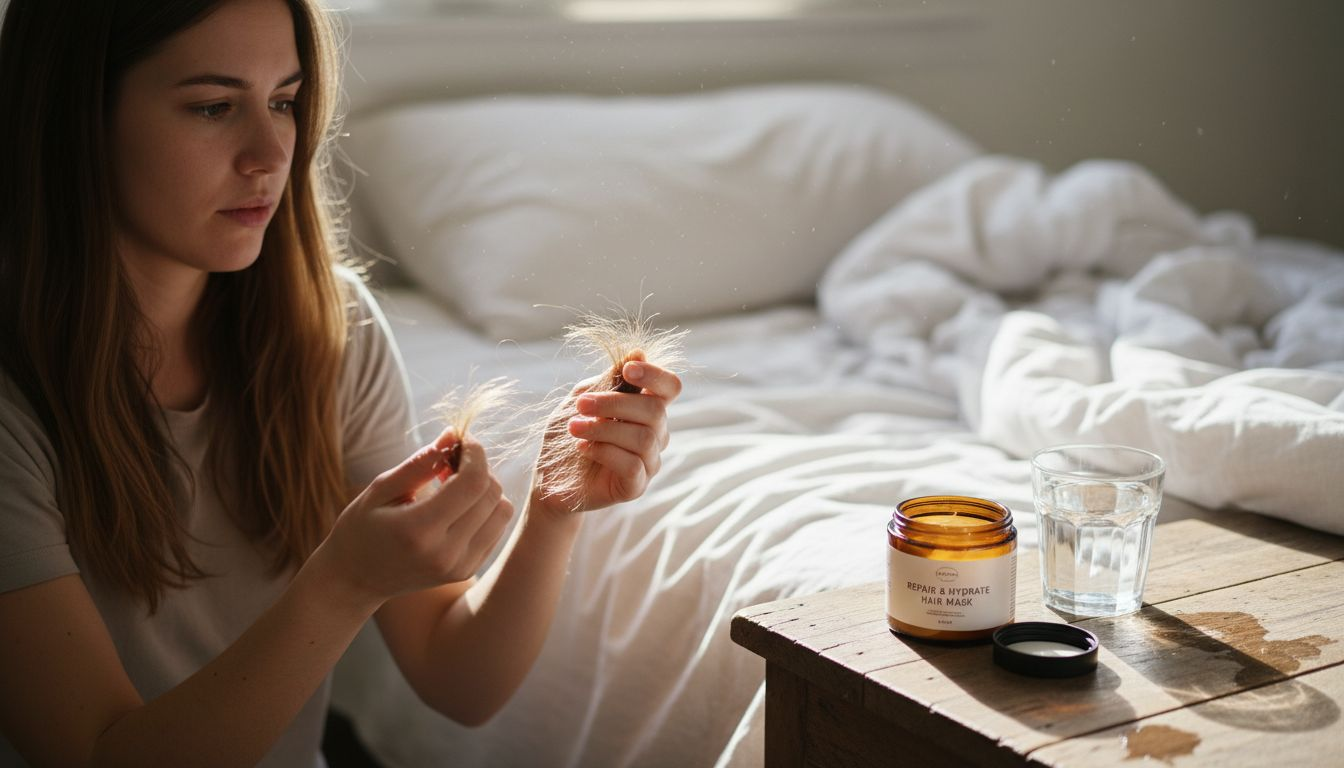
This is where keeping your hair hydrated with proper cleansing becomes transformative. Free from salt, parabens, and sulfates, hydrating products work with your hair’s natural structure instead of against it. They allow water to penetrate the cortex and stay there, building strength from the inside out.
The takeaway? Your hair doesn’t just want moisture—it needs it strategically managed. Growth happens when your cortex stays strong, cuticles lie flat, and hydration stays balanced.
Pro tip: Focus on hydrating the mid-lengths and ends of your hair first, not just the scalp—these areas are older and need more moisture support to prevent breakage and encourage visible length retention.
Your hair’s growth rate and appearance depend heavily on hydration. When your strands are properly moisturized, they grow stronger, break less, and reflect light beautifully. When they’re dehydrated, growth slows, breakage increases, and shine disappears. The connection is direct and measurable.
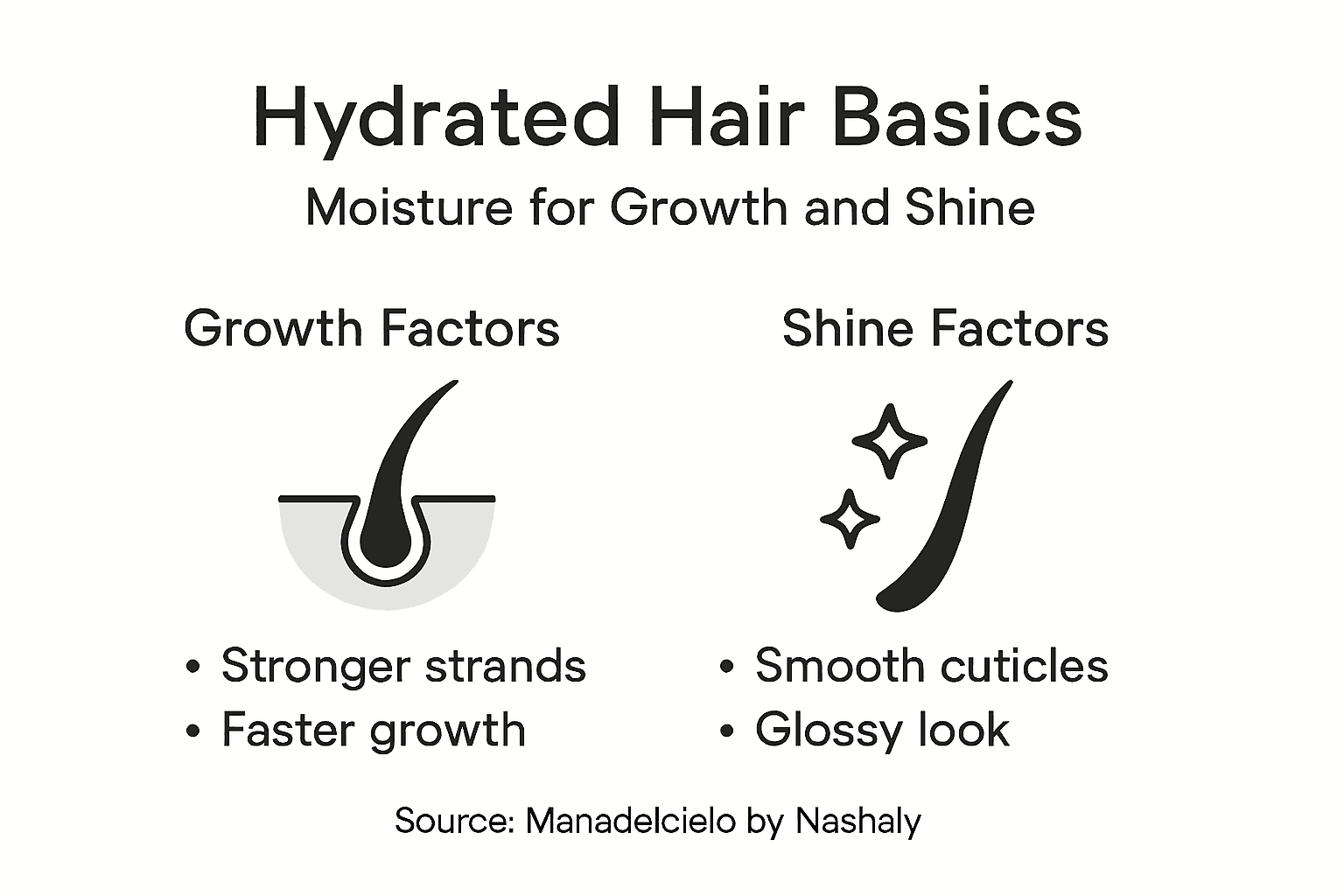
Water makes up approximately 25% of your hair strand’s weight. This isn’t just extra moisture—it’s structural. Proper internal hydration ensures efficient nutrient delivery to hair follicles, promoting healthy growth and strength. When you’re dehydrated, blood flow to your scalp restricts, starving follicles of the nutrients they need. The result: slower growth and weaker strands.
Dehydration creates a visible chain reaction. Your hair loses elasticity first, becoming stiff and brittle. Then breakage increases because strands can’t stretch without snapping. Finally, shine disappears because dehydrated hair scatters light instead of reflecting it smoothly.
Hydrated hair retains moisture, has improved elasticity, and is less prone to breakage—this directly translates to visible growth and luminous shine.
Here’s how hydration drives growth and shine:
Your scalp health directly influences hair growth. A dehydrated scalp becomes flaky, irritated, and inflamed—conditions that stress hair follicles. This stress disrupts the growth cycle, pushing more hair into the shedding phase prematurely. A hydrated scalp, by contrast, provides stable conditions for healthy follicles.
The shine component is equally important. When your cuticles are hydrated, they lie flat and smooth. Light bounces off them evenly, creating that glossy appearance you see in healthy hair. Dehydrated cuticles lift and separate, scattering light in different directions. The result looks dull, no matter how healthy your hair actually is.
For eco-conscious women in New York managing dry, damaged hair, hydrating conditioners designed specifically for deep moisture make a measurable difference. Products free from sulfates and silicones allow water to penetrate and stay inside your strands, not just coat the surface.
Consistent hydration supports your entire growth journey. You’ll notice breakage decreasing within weeks and visible length retention within months. Shine improves almost immediately once cuticles are properly moisturized.
Pro tip: Apply hydrating conditioner to damp hair and leave it on for 3-5 minutes before rinsing—this gives water time to penetrate the cortex and improves moisture retention throughout your day.
Not all hair absorbs and retains moisture the same way. Your hair’s porosity—its ability to absorb and hold water—determines exactly what hydration strategy will work best for you. Getting this right transforms your results. Getting it wrong means wasting money on products that don’t actually help your hair.
Think of porosity as how tightly your cuticles pack together. Hair porosity measures the hair’s ability to absorb and retain moisture, determined by your cuticle layer’s integrity. Low porosity hair has tightly sealed cuticles that resist water. High porosity hair has raised or damaged cuticles that grab water quickly. Medium porosity is balanced.
Low porosity hair presents a specific challenge. Your cuticles lie flat and close together, which means water struggles to penetrate. You might apply hydrating products and feel like nothing absorbs. The water sits on top, and your hair still feels dry and weighed down.
Low porosity hair repels water and takes longer to hydrate, requiring different product strategies than high porosity hair.
High porosity hair has the opposite problem. Your cuticles are raised or damaged, so water enters quickly but escapes just as fast. Your hair might feel wet and hydrated immediately, then dry out within hours. This creates the frustration of constantly needing moisture without ever feeling truly hydrated.
Understanding your porosity type shapes your entire routine:
Damage, chemical treatments, and genetics all influence your porosity. If you’ve colored or relaxed your hair, you likely have higher porosity in those sections. Virgin hair typically has lower porosity. Urban eco-conscious women managing dry, damaged hair often have a mix—low porosity at the roots, high porosity at the ends.
Hair porosity affects moisture retention and hydration needs differently for each type. Low porosity hair needs help opening cuticles to accept moisture. High porosity hair needs sealing strategies to lock moisture in. Tailoring your approach matters more than the products themselves.
Once you identify your porosity, you can choose hydrating products that actually work. A sulfate-free, silicone-free hydrating shampoo and conditioner work for all porosity types because they clean gently without stripping, allowing your hair’s natural moisture balance to stabilize.
Pro tip: Do the porosity test: take a single strand of clean hair, place it in room-temperature water, and time how fast it sinks—fast sinking means high porosity, slow sinking means low porosity, medium speed means balanced porosity.
The following table compares hydration needs and care techniques by hair porosity type:
| Porosity Type | Water Absorption Rate | Hydration Challenge | Best Care Techniques |
|---|---|---|---|
| Low Porosity | Slow | Water doesn’t penetrate easily | Use lightweight products and heat |
| Medium Porosity | Balanced | Occasional dryness | Standard hydrating routine |
| High Porosity | Rapid | Moisture escapes quickly | Use heavier products and seal oils |
Dehydrated hair isn’t just uncomfortable—it triggers a cascade of problems that compound over time. Your strands weaken, your scalp suffers, and you end up fighting preventable damage month after month. Understanding these risks helps you act before problems start.
Dehydration cuts off nutrient delivery to hair follicles. Dehydration reduces blood flow and nutrient delivery to hair roots, causing dry, brittle hair prone to breakage and shedding. When your follicles don’t get what they need, hair growth slows dramatically. You might notice you’re not retaining length even though you’re protecting your ends.
Your scalp takes the hit too. Dehydration causes scalp dryness, flaking, and irritation that directly damages hair follicles. An irritated scalp is a stressed scalp, and stressed follicles push hair into the shedding phase prematurely. You’ll see increased shedding in the shower and more hair on your pillow.
Dehydration impairs follicle function and scalp health, contributing to dryness, breakage, and potentially temporary hair loss—making prevention non-negotiable.
The damage compounds. As dehydration worsens, your cuticles lift and separate. This allows more moisture to escape and invites mechanical damage. Tangles form easier, breakage increases, and split ends multiply. What started as dryness becomes structural damage that takes months to grow out.
Key risks of dehydrated hair:
Prevention is simpler than repair. Consistent hydration supports scalp moisture and hair fiber integrity, protecting against these cascading problems. Drink adequate water daily—aim for at least 8 glasses. Use sulfate-free hydrating products that clean without stripping. Apply conditioner to every shower, focusing on mid-lengths and ends.
Gentle handling matters too. Dehydrated hair is fragile, so use a wide-tooth comb on wet hair, avoid tight styles, and minimize heat styling. When you do use heat, apply a hydrating product first to seal the cuticle.
Consistent hydration prevents expensive damage down the road. Your future hair—longer, stronger, shinier—depends on protecting your follicles and scalp today.
Pro tip: Keep a moisturizing hair mask or deep conditioner on hand and use it weekly, even when your hair feels okay—prevention is always easier than trying to repair months of dehydration damage.
Organic hair products work fundamentally differently than conventional options. Instead of coating your hair with silicones and synthetic polymers, they penetrate deeply to restore moisture from within. For eco-conscious women seeking real hydration without toxins, organic products deliver measurable results.
The difference comes down to ingredients. Natural-based conditioning agents derived from biobased materials effectively hydrate hair while minimizing environmental impact. These organic ingredients repair damage, restore smoothness, and provide sustainable alternatives to synthetic compounds. They focus on enhancing internal hydration rather than creating temporary shine through chemical coating.
Organic ingredients work at the molecular level. Shea butter penetrates the cortex to strengthen from inside. Coconut oil seals the cuticle to lock moisture in. Botanical extracts deliver antioxidants and nutrients your scalp needs for healthy follicles. Unlike sulfates that strip everything away, these ingredients clean gently while supporting your hair’s natural moisture balance.
Organic products restore moisture, reduce damage, and enhance shine while avoiding toxins—making them ideal for long-term hair health and growth.
Key organic ingredients for hydration:
Here’s an overview of popular organic ingredients and their main hair benefits:
| Ingredient | Primary Effect | Works Best For |
|---|---|---|
| Shea Butter | Deep strengthening | Brittle or elastic hair |
| Coconut Oil | Cuticle sealing | High porosity or dry hair |
| Aloe Vera | Scalp soothing | Sensitive, irritated scalp |
| Argan Oil | Adds shine, protects | Hair exposed to heat tools |
| Botanical Extracts | Nutrient support | Overall scalp health |
Organic shampoos and conditioners free from sulfates, parabens, and silicones allow your hair to function normally. Without harsh stripping, your scalp stabilizes its natural oil production. Without silicone coating, water can actually penetrate your strands. Within a few weeks, you’ll notice your hair feels naturally softer and shinier—not artificially coated.
Organic oils, leave-in conditioners, and deep conditioning treatments support healthier, hydrated hair while building a foundation for growth. Use them strategically: organic oil as a pre-shampoo treatment, leave-in conditioner on damp ends, deep conditioning mask weekly. This layered approach maximizes hydration without overloading fine hair.
Building an organic hair care routine around deep hydration means consistency. Your hair will improve gradually—breakage decreases in weeks, visible growth appears in months, shine builds over time. The investment in quality organic products pays off through stronger, longer, shinier hair.
Pro tip: Apply organic conditioner or treatment to soaking wet hair—water acts as a carrier, allowing ingredients to penetrate deeper than when applied to damp hair.
If you struggle with dry, brittle hair that resists growth and lacks shine you are not alone. This article revealed how critical balanced hydration is to maintaining hair elasticity, strengthening the cortex, and smoothing cuticles for that natural radiant glow. Addressing challenges like hygral fatigue and porosity means choosing the right products that work with your hair’s unique moisture needs instead of against them.
Discover how our collection of All Products – ManadelcielobyNashaly offers organic solutions free from salt, parabens, sulfates, and silicone. These carefully crafted formulas deeply hydrate mid-lengths and ends, seal moisture inside, and nurture scalp health supporting visible growth and lasting shine.

Experience the transformative power of true hydration today with ManadelcielobyNashaly. Don’t let dryness hold your hair back anymore. Visit our site now to build a regimen tailored for your hair’s growth and shine goals and start your journey to healthier, hydrated hair.
Hair hydration refers to the moisture that penetrates the hair strands. It is crucial for growth because hydrated hair promotes flexibility, reduces breakage, and enhances the delivery of nutrients to hair follicles, leading to stronger and healthier growth.
Dehydration leads to weakened hair that is more prone to breakage and split ends. It can also result in a dull appearance and tangling, as well as scalp issues such as dryness and irritation, which can hinder hair growth.
Signs of dehydrated hair include brittleness, lack of shine, increased tangling, and a rough texture. You may also notice excessive shedding and a flaky scalp, indicating that your hair and scalp need hydration.
To effectively hydrate your hair, use sulfate-free shampoos and conditioners that allow moisture to penetrate. Focus on applying hydrating products to the mid-lengths and ends of your hair, and consider using organic ingredients like shea butter or coconut oil for deep moisture repair.
WhatsApp: 347-241-9558


 USD
USD EUR
EUR
 AUD
AUD
 GBP
GBP
 JPY
JPY
 INR
INR