Total: $0.00
Taxes and shipping calculated at checkout


Time to shop! Find your favorite product, check the latest collection & don’t miss out the best discounts!


Searching for natural ways to repair and nourish your hair can feel confusing, especially when so many products promise miracles but contain hidden chemicals. For eco-conscious women worldwide, the desire for vibrant hair meets the need for safety and sustainability. Herbal masks made with organic plant-based ingredients like Bhringraj, Hibiscus, and Fenugreek deliver deep hydration and real repair without sulfates or parabens. Discover how choosing the right mask transforms your routine and supports healthier, more resilient hair.
| Point | Details |
|---|---|
| Hair Masks Provide Intensive Care | Hair masks deliver deep hydration and repair, addressing specific concerns like moisture loss and damage that regular conditioners cannot fix. |
| Quality Ingredients Matter | Effective hair masks utilize natural, plant-based ingredients to nourish and strengthen hair without harsh chemicals. |
| Avoid Common Myths | Hair masks benefit all hair types, and leaving them on longer than recommended does not enhance results. |
| Proper Usage is Crucial | Apply masks correctly, focusing on mid-lengths and ends, and limit use to 1-2 times per week to prevent buildup. |
A hair mask is a concentrated treatment product designed to penetrate your hair shaft and deliver intense hydration, nourishment, and repair. Unlike regular conditioners that sit on the surface, masks work deeply to restore moisture and strengthen damaged strands from within.
Think of it like this: a conditioner is your daily maintenance, but a mask is your weekly rescue mission. It stays on your hair longer, allowing ingredients time to absorb and transform dry, brittle texture into soft, manageable locks.
These treatments target specific hair concerns with concentrated doses of beneficial ingredients. Here’s what they accomplish:
The most effective masks use natural plant-based ingredients. Herbal components like Bhringraj, Brahmi, Hibiscus, and Fenugreek have been scientifically shown to strengthen follicles, promote growth, and alleviate dryness without harsh chemicals.
Let’s clear up what’s not true. These misconceptions keep people from getting the deep hydration their hair desperately needs.
Myth 1: “They’re only for damaged hair.”
False. Healthy hair benefits just as much from intensive hydration. Regular mask use prevents damage before it happens, maintaining shine and strength even if your hair is currently in good condition.
Myth 2: “You need to leave them on for hours to see results.”
Not necessarily. Most quality masks deliver results in 10-20 minutes because they’re formulated with concentrated actives. Your hair isn’t absorbing ingredients faster just because a mask sits longer. Time matters less than formula quality.
Myth 3: “All masks are basically the same.”
Completely wrong. Formulations vary dramatically. Masks made with organic, hydration-focused ingredients deliver transformative results, while masks with silicones, sulfates, and parabens create temporary smoothness that washes away.
Myth 4: “You can use masks daily without problems.”
Over-masking can actually weigh down fine hair and cause buildup. Most people see optimal results with 1-2 applications per week, depending on their hair type and condition.
Your hair loses moisture constantly through styling, weather exposure, and daily friction. Without intentional hydration treatments, strands become brittle and prone to breakage. A mask restores the moisture balance your routine conditioner can’t quite achieve alone.
Quality hair masks formulated without sulfates, parabens, and silicones deliver real transformation by working with your hair’s natural structure rather than coating it temporarily.
Pro tip: Apply your mask to damp (not soaking wet) hair and focus on mid-lengths and ends where moisture depletion is most severe—avoid concentrating product directly on your scalp unless you have significant dryness issues.
Not all hair masks are created equal. Your specific hair type and concerns determine which mask will deliver the best results. The right formula tackles your unique issues while the wrong one might leave your hair feeling heavier or drier.
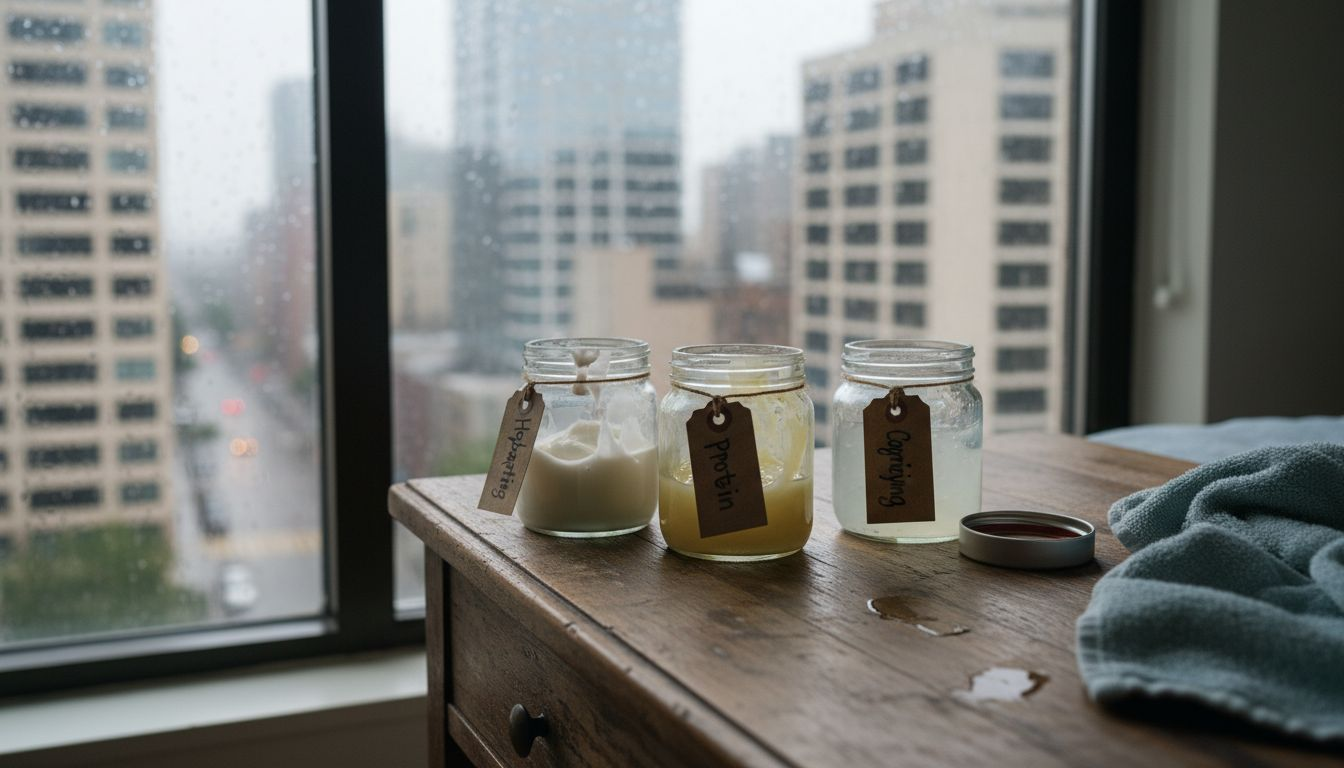
If your hair feels like straw, a hydrating mask is your priority. These formulas flood parched strands with moisture and are designed for normal-to-dry, curly, or coarse textures that struggle to retain hydration.
Hydrating masks typically contain:
Use these weekly if your hair feels consistently dry or monthly as maintenance for already-healthy hair.
Protein-based masks rebuild structure in hair that’s been compromised by heat styling, coloring, or chemical treatments. They strengthen weak points where breakage typically occurs.
These masks work by:
Hydrolyzed keratin and plant proteins are especially effective because they’re small enough to penetrate the hair shaft.
Product buildup from styling sprays, dry shampoo, and silicone-heavy conditioners creates dull, limp hair. A clarifying mask removes this residue while still nourishing your strands.
These masks use natural clay or charcoal to absorb buildup without stripping beneficial oils from your scalp and ends.
Hair challenges vary widely, and specialized masks address dandruff, frizziness, breakage, and color fading with targeted formulations.
Choose based on your primary concern:
Both options have merit depending on your lifestyle and hair needs. Homemade masks using avocado, honey, and coconut oil offer flexibility and cost savings. Ready-made formulas deliver convenience and consistent results.
For eco-conscious people seeking clean ingredients, ready-made organic masks eliminate guesswork and ensure you’re avoiding sulfates, parabens, and silicones.
Matching your mask to your specific hair type and concern maximizes benefits while minimizing the risk of weighing hair down or causing unwanted reactions.
Pro tip: Identify your primary hair concern first (dryness, damage, buildup, or frizz), then select one mask type to use consistently for 4-6 weeks before assessing results—switching masks constantly prevents you from seeing real transformation.
To help you select the right hair mask, here’s a comparison based on hair concerns and benefits:
| Hair Concern | Recommended Mask Type | Main Benefit | Key Ingredient Focus |
|---|---|---|---|
| Dry, brittle hair | Hydrating mask | Restores moisture balance | Plant oils, glycerin |
| Damaged hair | Protein-based mask | Reinforces hair structure | Hydrolyzed keratin, wheat |
| Product buildup | Clarifying mask | Removes residue, refreshes | Clay, charcoal |
| Color-treated hair | Color-protection mask | Prevents dye fading | Antioxidant botanicals |
| Frizzy, unruly hair | Anti-frizz mask | Smooths and adds shine | Smoothing oils |
| Sensitive scalp | Scalp-soothing mask | Calms irritation | Herbal extracts, aloe |
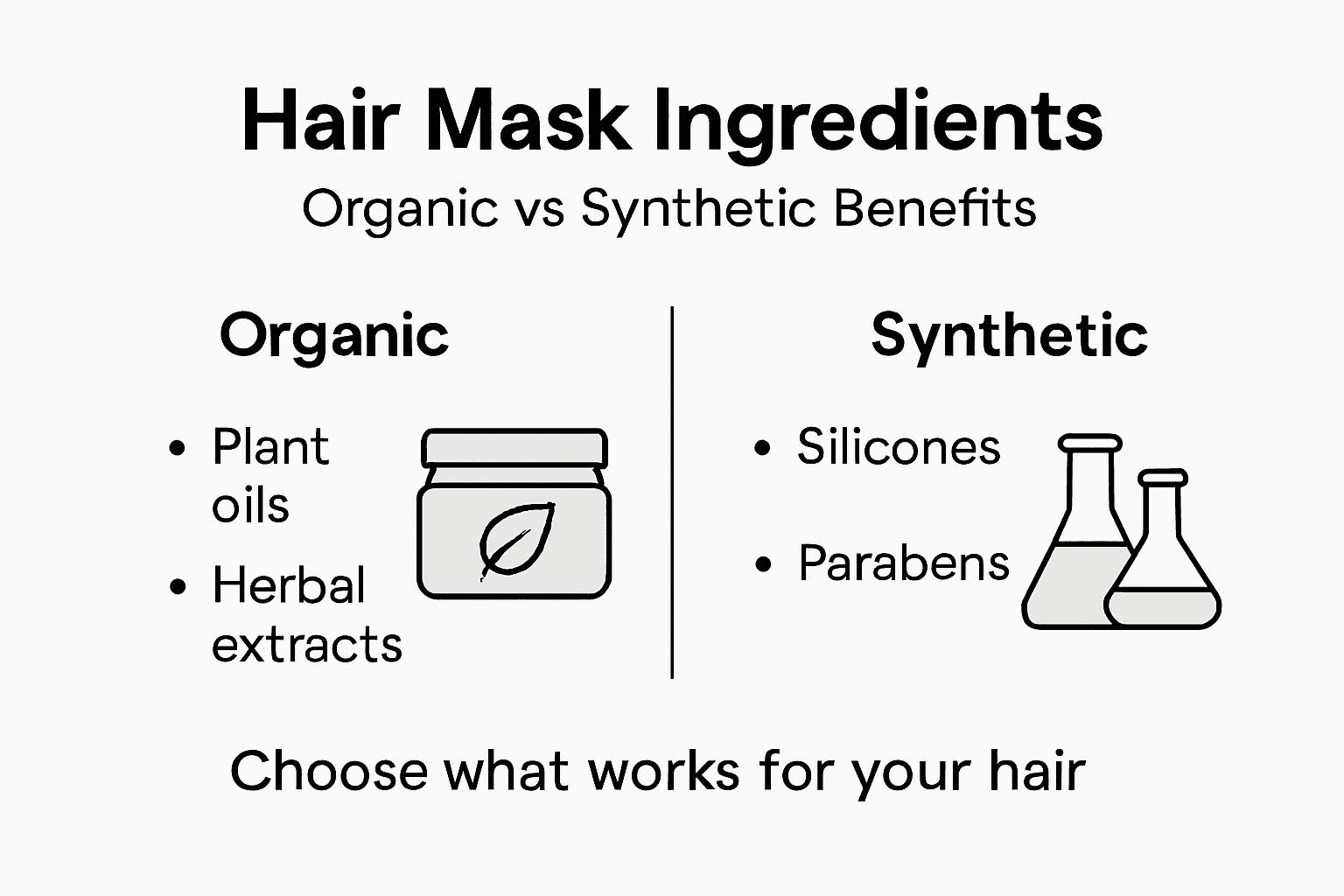
Organic ingredients work differently than synthetic chemicals. They don’t just coat your hair surface—they penetrate and nourish from within, restoring what damage and environmental stress have stripped away. Your hair responds by becoming stronger, shinier, and healthier.
Coconut oil penetrates the hair shaft to lock in moisture while preventing protein loss. It’s lightweight enough for fine hair yet deeply conditioning for coarse textures.
Castor oil stimulates blood flow to your scalp, encouraging stronger follicles and healthier growth. It also has natural anti-inflammatory properties that soothe irritation.
These oils work because they mimic your scalp’s natural sebum. Your hair recognizes them as beneficial rather than foreign, making absorption easier and faster.
Natural herbs like Bhringraj, Hibiscus, and Fenugreek strengthen hair from the root. They deliver nutrients directly to follicles while reducing hair fall and promoting growth.
Key benefits include:
Organic hair care approaches eliminate harsh chemicals while delivering real results. Synthetic ingredients create temporary smoothness through coating, but they build up over time and can damage your scalp’s natural pH balance.
Organic formulations work with your hair’s biology instead of against it. They’re gentler on sensitive scalps and won’t cause the irritation, flaking, or dryness that parabens and sulfates often trigger.
Tea tree oil fights scalp bacteria and fungus naturally, making it ideal for dandruff and irritation. Neem oil has similar antimicrobial benefits plus anti-inflammatory action.
Basil extract improves circulation and adds shine while protecting against environmental damage. These plants have been used for centuries because they actually work—science now confirms what traditional practices have always known.
Organic ingredients are affordable, safe for all hair types, and align with sustainable practices. They don’t accumulate in your system or harm your scalp’s delicate microbiome the way synthetic chemicals can.
Your hair doesn’t need laboratory concoctions. It needs real nutrients that your body recognizes and can actually use.
Organic herbal ingredients nourish hair at the cellular level by replenishing essential nutrients while remaining safe for sensitive scalps and all hair types.
Pro tip: Choose masks with multiple organic herbs rather than single-ingredient formulas—combined botanicals provide synergistic benefits that address multiple hair concerns simultaneously while creating a more resilient treatment.
For easy reference, here’s a summary of how organic and synthetic mask ingredients differ:
| Aspect | Organic Ingredients | Synthetic Ingredients |
|---|---|---|
| Hair absorption | Penetrate and nourish deeply | Mostly coat surface |
| Long-term effect | Strengthen hair, gentle on scalp | Can disrupt scalp balance |
| Safety | Low risk, safe for most types | Potential for irritation |
| Sustainability | Eco-friendly, biodegradable | Often polluting, chemical-based |
Hair masks are generally safe when used correctly, but mistakes happen. The wrong approach can leave your hair weighed down, irritated, or even worse off than before. Knowing what to avoid and how to choose wisely prevents wasted money and damaged strands.
Too much mask use is the most common mistake. Using a mask more than twice weekly can cause product buildup, leaving hair limp and dull instead of shiny and strong.
Buildup happens when:
Start with one mask application per week. Increase frequency only if your hair genuinely needs it after four weeks of consistent use.
Proper application technique prevents scalp irritation and ensures effective absorption. Most people make one critical error: applying mask directly to their scalp.
Your scalp already produces natural oils. Mask ingredients applied there trap excess oil and moisture, creating irritation, flaking, and discomfort. Instead, focus on mid-lengths and ends where your hair needs nourishment most.
Other application mistakes include:
Most masks work effectively in 10-20 minutes. Leaving one on for hours doesn’t improve results—it just wastes time and can sometimes cause irritation from prolonged contact.
Check your specific mask instructions. Different formulations have different optimal timing based on their ingredient concentration and molecular structure.
Understanding your hair type and selecting compatible masks prevents allergic reactions and ineffective treatment. This is non-negotiable if you have sensitive scalp, color-treated hair, or specific concerns like dandruff or extreme frizz.
Match your mask to your primary need:
Even natural ingredients can trigger reactions in sensitive individuals. Conduct a patch test 24 hours before applying a new mask to your entire hair and scalp.
Apply a small amount behind your ear or on your inner elbow. Wait a full day to check for redness, itching, or irritation before committing to the full product.
Avoid masks containing sulfates, parabens, and silicones despite marketing claims of “hydration.” These synthetic ingredients create temporary smoothness while damaging your hair long-term and contributing to scalp buildup.
Organic, chemical-free formulations deliver real transformation without hidden risks to your scalp health or hair integrity.
Proper mask selection based on your hair profile combined with correct application technique and appropriate frequency prevents all common risks while maximizing genuine benefits.
Pro tip: Always cleanse your hair thoroughly before applying a mask—clean hair absorbs treatment ingredients far more effectively than hair with product residue or buildup, dramatically improving results from the same formula.
If you struggle with dry, brittle, or damaged hair and wonder how to restore moisture and strength the right way this is your chance to make a change. The article highlights common challenges like hair dehydration, damage from heat and chemicals, and the need for intensive hydration treatments that penetrate deeply rather than just surface conditioning. It talks about protein and hydrating masks, natural plant oils, and herbal extracts that rebuild and nourish hair from root to tip without harsh ingredients.
Discover how our organic hair care products free from sulfates, parabens, silicones and salts offer exactly the deep hydration and repair your hair deserves. Designed to support hair growth and shine, these masks harness the power of natural botanicals to strengthen follicles, restore moisture balance, and tame frizz. Take control of your hair health now by visiting Mana Del Cielo by Nashaly to explore proven solutions that work gently yet effectively. Don’t wait until damage worsens—unlock your hair’s full potential with the right mask treatment today.
Hair masks deliver deep hydration, repair damage, strengthen hair follicles, smooth frizz, and support healthier scalp conditions, ultimately transforming dry, brittle hair into soft and manageable locks.
Most people achieve optimal results with 1-2 applications per week, depending on their hair type and condition. Overusing can lead to buildup and weigh hair down.
A hair mask is a concentrated treatment designed to penetrate the hair shaft, providing intense hydration and nourishment, while a regular conditioner mainly offers surface-level moisture and care.
Yes, healthy hair can benefit from hair masks as they provide preventative hydration and help maintain shine and strength, enhancing overall hair health.
WhatsApp: 347-241-9558


 USD
USD EUR
EUR
 AUD
AUD
 GBP
GBP
 JPY
JPY
 INR
INR