Total: $0.00
Taxes and shipping calculated at checkout


Time to shop! Find your favorite product, check the latest collection & don’t miss out the best discounts!


Finding hair care that actually supports growth and shine can feel overwhelming, especially when every label claims to be natural yet hides questionable ingredients. Women in busy cities often want non-toxic, practical routines tailored to their unique hair textures. By focusing on organic solutions and understanding your hair’s needs, you can enjoy healthier, more radiant hair without sacrificing your wellness values or city lifestyle.
| Key Point | Explanation |
|---|---|
| 1. Identify your specific hair type | Determine texture, curl pattern, and density to tailor your hair care routine. |
| 2. Choose organic, safe products | Avoid sulfates, parabens, and silicones for healthier hair and scalp. |
| 3. Establish a consistent washing routine | Cleanse hair based on its type and use appropriate techniques for conditioning. |
| 4. Apply targeted organic treatments | Use natural oils to deeply nourish and repair hair, following best application practices. |
| 5. Track progress and adapt your routine | Regularly assess hair health and make adjustments for optimal results. |
Understanding your hair’s unique characteristics is crucial for developing an effective organic hair care routine. Hair characteristics vary widely across different genetic backgrounds, influencing how you’ll approach styling and maintenance.
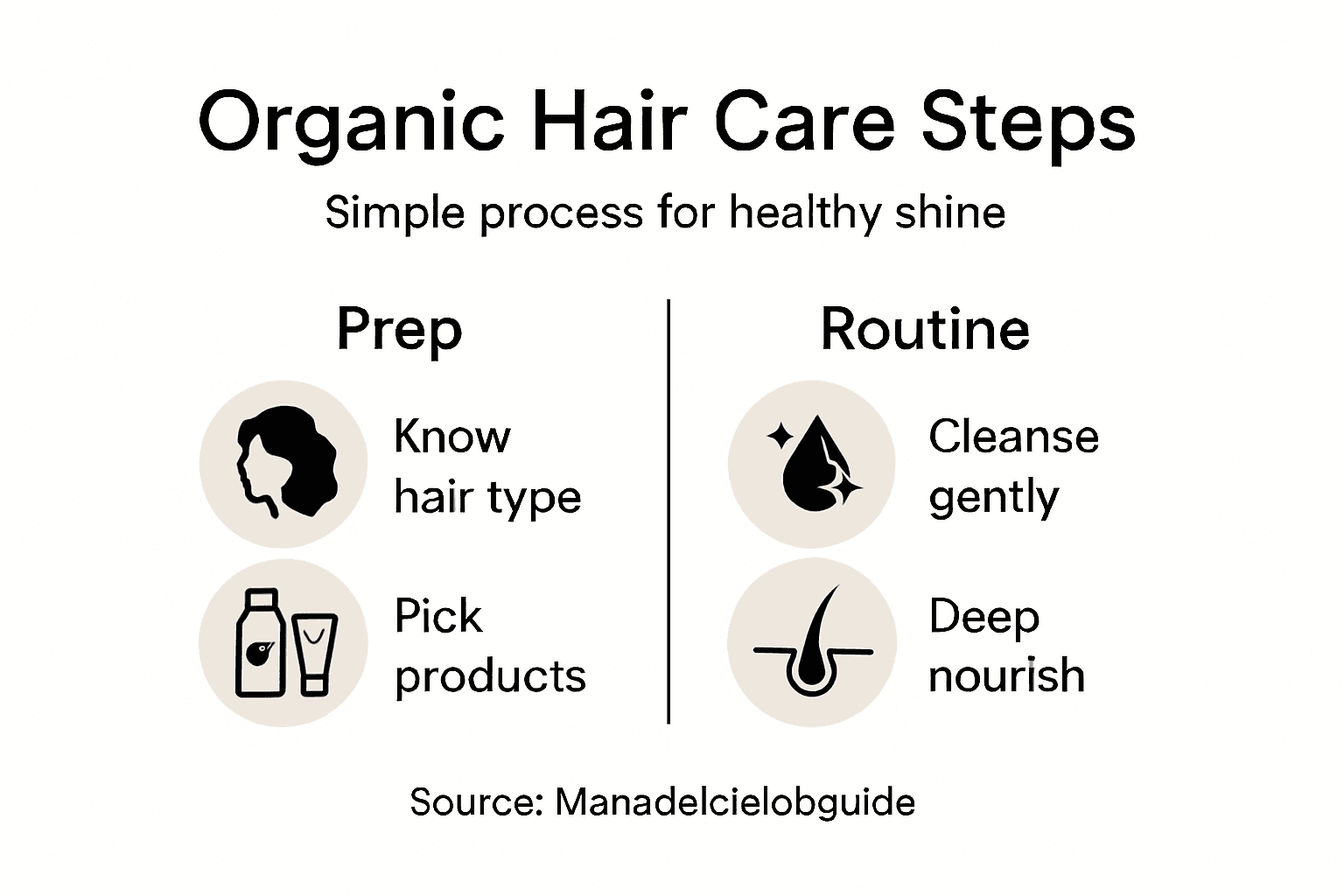
To accurately determine your hair type, you’ll need to assess three primary factors: texture, curl pattern, and density. Most hair types fall into four main categories: straight, wavy, curly, and coily. The Andre Walker Hair Typing System provides a comprehensive framework for understanding these variations.
Here’s how to identify your specific hair type:
Pro tip: Natural hair patterns are best observed without heat styling or product interference.
Pro tip: Take clear, well-lit photos of your hair from multiple angles to help track and understand your unique hair type over time.
Here’s a quick summary of common hair types and their unique care considerations:
| Hair Type | Key Characteristics | Care Focus |
|---|---|---|
| Straight | Smooth, lacks curls | Lightweight hydration |
| Wavy | S-shaped pattern | Frizz control, moisture |
| Curly | Defined ringlets | Deep conditioning, detangling |
| Coily | Tight, springy coils | Intensive moisture, gentle handling |
Navigating the world of organic hair care means making smart choices about the products you use. Haircare products using plant-derived biopolymers offer a healthier alternative to traditional chemical-laden formulations.
When selecting organic hair products, focus on avoiding these harmful ingredients:
Research shows botanical ingredients can provide better hair protection without harsh chemicals.
Silicone-free alternatives are increasingly available, using natural emollients that nourish hair without buildup. These products support healthier hair growth while being environmentally responsible.
Pro tip: Keep a smartphone app that helps identify harmful ingredients while shopping to make quick, informed decisions about your hair care products.
Creating a personalized hair washing routine is key to maintaining healthy, vibrant hair. Hair and scalp hygiene requires understanding your unique hair needs and developing a consistent approach.
Your structured wash routine should focus on these critical elements:
Washing techniques vary based on individual hair texture and scalp condition.
Applying conditioner correctly is crucial. Work the product through mid-lengths and ends, avoiding the scalp to prevent excess oil buildup. Let it sit for 2-3 minutes before rinsing with cool water to lock in moisture and enhance shine.

Pro tip: Invest in a microfiber towel to gently squeeze out excess water, reducing hair breakage and preserving your hair’s natural moisture.
Nourishing your hair requires more than just basic washing - it demands targeted, organic treatments that restore and protect your hair’s natural vitality. Herbal hair tonics with natural oils offer powerful solutions for comprehensive hair health.
Choose organic treatments that provide deep nourishment:
Deep treatments work best when applied consistently and thoughtfully.
Focus on distributing the treatment evenly, paying special attention to damaged ends and dry areas. Different hair types require different approaches - thick hair might need more product, while fine hair requires a lighter touch.
Pro tip: Wrap your hair in a warm towel during treatment to enhance oil absorption and maximize nourishment.
Below is a comparison of popular natural oils and their main benefits in organic hair treatments:
| Oil Type | Main Benefit | Ideal For |
|---|---|---|
| Castor Oil | Boosts hair strength | Dry or thinning hair |
| Coconut Oil | Deep moisturization | Curly and coily types |
| Clove Oil | Supports scalp health | Oily or irritated scalps |
Tracking your hair care progress is essential for achieving the vibrant, healthy hair you desire. Haircare products with botanical films help you monitor visible improvements in shine and texture.
Establish a systematic approach to evaluating your hair care routine:
Consistent monitoring leads to personalized hair care success.
Dermatologist recommendations suggest paying attention to subtle changes. Some routines might require tweaking - perhaps adjusting washing frequency or trying a different organic conditioner. Your hair’s needs will evolve, so remain flexible and observant.
Pro tip: Create a smartphone album dedicated to tracking your hair’s progress, allowing you to visually compare improvements over time.
Struggling to find the perfect hair care products that support your unique hair type without harmful ingredients like sulfates and silicones The key to vibrant shine and healthy growth starts with choosing deeply hydrating organic solutions tailored to your needs Our collection emphasizes gentle, nutrient-rich formulations that enhance your natural texture while protecting scalp health and boosting manageability
Discover the difference of products designed to nourish and revitalize by exploring our COMBOS/DUOS/KITS – ManadelcielobyNashaly which offer thoughtfully paired treatments for a complete organic hair care routine For a full range of options visit All Products – ManadelcielobyNashaly and start your journey to stronger shinier hair at Manadelcielobynashaly today Take the first step now toward hair that feels healthier every day
To determine your hair type, assess your hair’s texture, curl pattern, and density. Wash your hair and let it air dry without products, then observe its characteristics to identify whether it’s straight, wavy, curly, or coily.
Focus on avoiding sulfates, parabens, synthetic salts, and silicones in your hair care products. Read labels carefully and choose organic or natural options to protect your hair and scalp.
The washing frequency depends on your hair type; generally, straight hair can be washed 2-3 times a week, while curly and coily types may benefit from washing every 5-7 days. Adjust your schedule based on how your hair feels and looks for the best results.
Apply conditioner primarily to the mid-lengths and ends of your hair, avoiding the scalp. Let it sit for 2-3 minutes before rinsing with cool water to lock in moisture and enhance shine.
Take progress photos every 2-4 weeks to visually assess changes in shine, texture, and overall health of your hair. Document your observations in a hair care journal to note what works well and what may need adjusting.
Consider using natural oils like castor, coconut, or clove oils as part of your hair care routine. Massage the chosen oil into your scalp and hair lengths, leaving it on for 30-60 minutes before rinsing to maximize nourishment and improve hair health.
WhatsApp: 347-241-9558


 USD
USD EUR
EUR
 AUD
AUD
 GBP
GBP
 JPY
JPY
 INR
INR