Total: $0.00
Taxes and shipping calculated at checkout


Time to shop! Find your favorite product, check the latest collection & don’t miss out the best discounts!


Trying to keep curls hydrated in a city like New York or London often feels like an uphill battle. Curly hair’s unique fibers, filled with twists and bends, actually slow down the natural spread of scalp oils, making dryness a constant struggle. Since these built-in curves leave your strands craving moisture, you need hydration strategies made for curls, not straight hair. Learn why hydration is so vital for lasting softness, definition, and bounce, and how organic ingredients can make all the difference for your curls.
| Point | Details |
|---|---|
| Understanding Hair Structure | Curly hair has a different structure than straight hair, making it more challenging to retain moisture due to twists and bends that hinder oil distribution. |
| Tailored Hydration Strategies | Each curl type has unique hydration needs; lightweight moisture for wavy hair, balanced hydration for curly hair, and intensive moisture for coily hair are essential for health. |
| Avoiding Common Mistakes | To promote hydration, avoid overwashing, use sulfate-free shampoos, apply conditioner to mid-shaft and ends only, and detangle gently while hair is wet. |
| Organic Products Benefits | Organic hydrating products provide better moisture retention, reduce dryness and frizz, and support scalp health without harmful chemical buildup. |
Your curls have a completely different structure than straight hair, and that’s why they behave so differently when it comes to moisture. Understanding this biological reality is the first step toward better hydration.
The Structural Challenge
Straight hair has a smooth surface where natural oils glide easily from your scalp down the entire strand. Curly hair? Not so much. The complex curl pattern of each fiber creates bends and twists that slow down sebum distribution significantly.
This isn’t a minor inconvenience. It’s a major structural disadvantage when it comes to moisture retention.
Why Oils Can’t Reach Your Ends
Your scalp produces natural oils designed to protect and hydrate your hair. But here’s the problem: those oils follow a straight path downward on smooth hair. With curls, they get trapped along the bends and curves of your shaft.
By the time oil travels from root to tip on curly hair, you’ve lost most of it. Your ends remain parched while your scalp produces plenty of oil.
Raised Cuticles Accelerate Moisture Loss
The structural bends in curly hair also cause your cuticles to raise more frequently than straight hair does. Think of cuticles like roof shingles: when they lay flat, water stays out. When they raise, water escapes.
The Porosity Problem
How hair structure affects moisture absorption reveals that curly hair is naturally more porous. More porous hair absorbs water quickly but also releases it just as fast.
This means your curls need not just hydration, but continuous hydration. One wash isn’t enough; you need strategies that lock moisture in and prevent loss between applications.
Curly hair loses moisture faster than straight hair because of its unique structure, raised cuticles, and increased porosity. This isn’t a defect you can fix—it’s why hydration is non-negotiable for healthy curls.
What This Means for Your Routine
Your curls don’t need the same approach as straight hair. Standard products won’t cut it because they weren’t designed for your hair’s specific moisture challenges. You need hydration that works with your curl’s biology, not against it.
Organic, sulfate-free formulas penetrate your curls more effectively. They also avoid the harsh chemicals that strip away what little moisture your curls manage to retain.
Pro tip: Apply leave-in conditioner to soaking wet hair immediately after washing—your raised cuticles are most receptive to moisture absorption right then, allowing deeper penetration before water evaporates.
Not all curls are created equal. Your specific curl pattern determines what moisture challenges you face and how you should approach hydration. Recognizing your curl type is the foundation for an effective care routine.
Understanding the Classification System
Curly hair scientists use a numbering system from 1 to 4, with letter subcategories (A, B, C) that indicate tightness. The classification ranges from wavy to coily curl types, and each level has distinct characteristics and hydration needs.
This isn’t arbitrary labeling. Each category faces genuinely different moisture challenges that require different solutions.
Type 2: Wavy Hair
Wavy hair sits between straight and curly. It has a gentle S-curve that creates subtle bends along the shaft. Type 2A waves are loose and fragile, while Type 2C waves show more definition.
The main challenge: your waves flatten easily under moisture weight. Too much heavy product and your waves collapse into limp strands. You need lightweight hydration that adds moisture without sacrificing volume.
Type 3: Curly Hair
Type 3 curls form distinct spirals and loops that hold their shape naturally. Type 3A curls are larger and bouncier, while Type 3C curls are tighter with more defined coils.
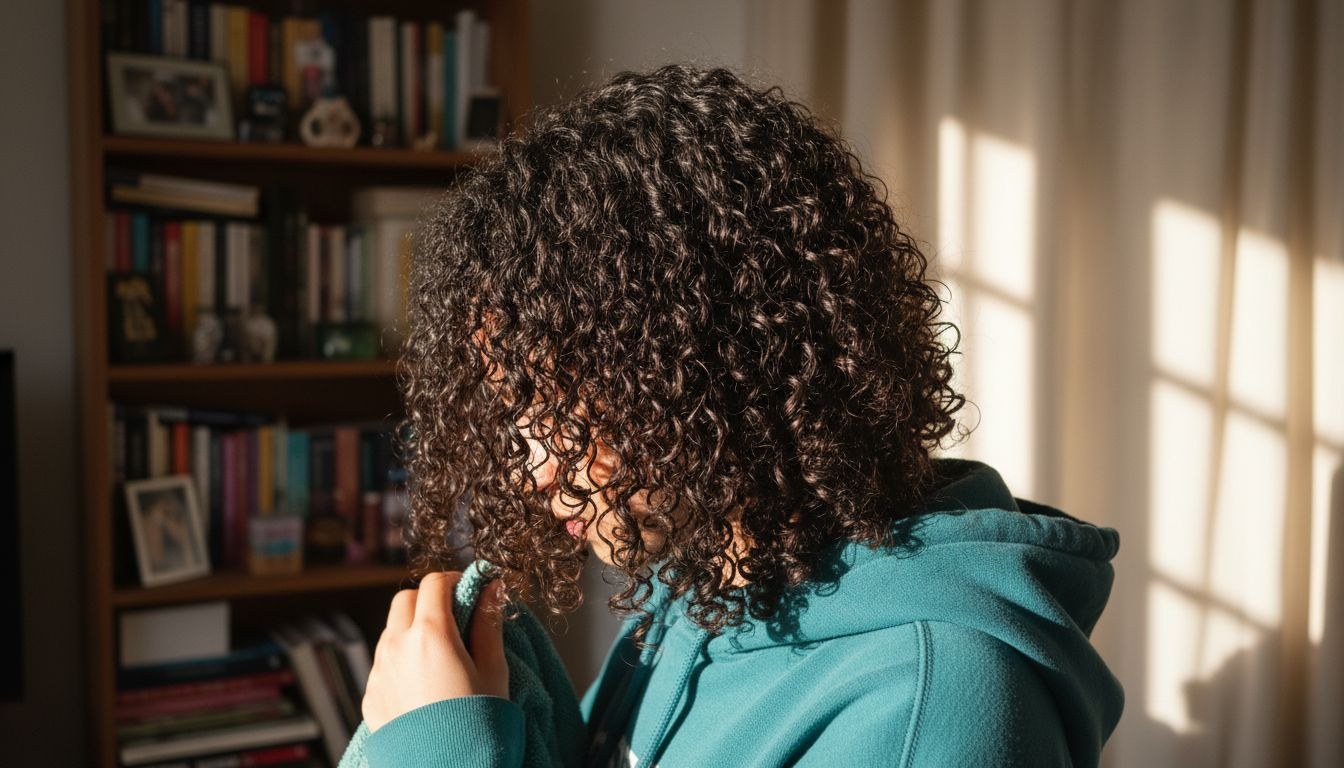
Your challenge is balancing hydration with definition. Over-moisturize and your curls lose their shape. Under-moisturize and they become frizzy and undefined. Finding that sweet spot requires precision.
Type 4: Coily and Kinky Hair
Type 4 curls experience significant shrinkage and require intense moisture to maintain shape and prevent breakage. Type 4A coils are tight and springy, Type 4B curls are zigzag patterned, and Type 4C curls are the tightest.
Your biggest challenges include:
Why Each Type Needs Different Hydration
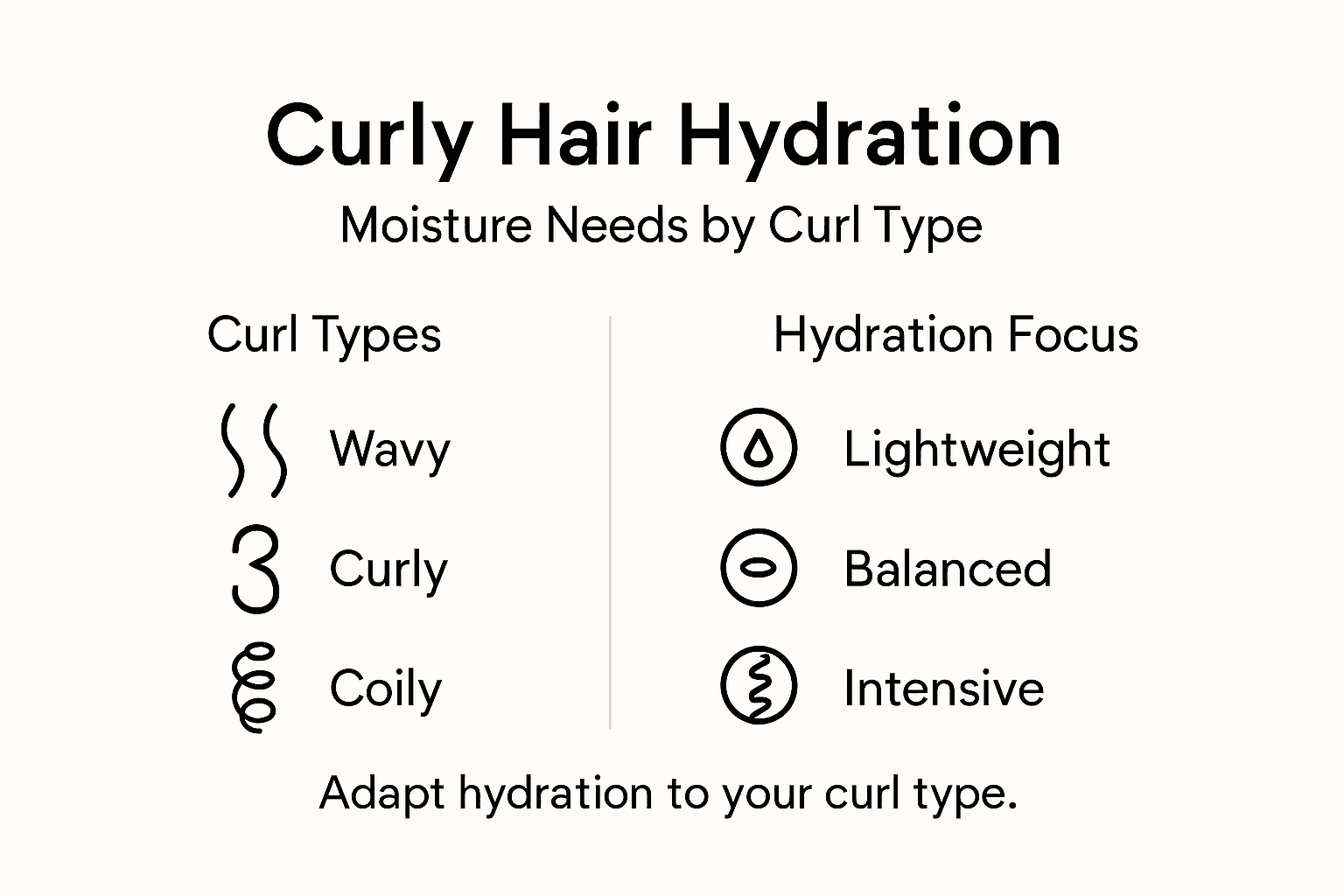
Type 2 waves need lightweight formulas that won’t weigh them down. Type 3 curls need balanced hydration that maintains definition. Type 4 coils need intensive moisture that penetrates deeply and seals moisture in.
Using the wrong hydration strategy for your curl type wastes time and money. It also leaves your curls frustrated and unhealthy.
Your curl pattern determines your hydration strategy. Waves need lightweight moisture, curls need balanced hydration, and coils need intensive, continuous moisture to thrive.
Finding Your Curl Type
Let your hair dry naturally without products to see your true pattern. Many people use multiple types across their head, which is completely normal. You may be Type 3A on top and Type 3C underneath.
Once you know your pattern, you can choose hydration products designed specifically for your needs.
Here’s a quick comparison of curl types and their primary hydration needs:
| Curl Type | Key Characteristic | Main Hydration Need | Typical Hydration Challenge |
|---|---|---|---|
| Type 2 (Wavy) | Loose S pattern | Lightweight moisture | Waves flatten under heavy products |
| Type 3 (Curly) | Defined spirals | Balanced hydration | Finding the right balance of moisture |
| Type 4 (Coily/Kinky) | Tight coils or zigzags | Intensive moisture | Preventing severe dryness and shrinkage |
Pro tip: Take a photo of your wet hair before applying any products, then compare it to curl pattern charts online—this removes guesswork and helps you identify your exact type so you can select hydration products that actually match your curl’s needs.
Hydrated curls don’t just feel better—they perform better. Water transforms your hair’s physical structure at a molecular level, giving your curls the strength and flexibility they need to look defined and healthy.
The Science of Hydration and Elasticity
Water doesn’t simply sit on your hair surface. It penetrates the hair shaft and bonds with the keratin protein structure, fundamentally changing how your curls behave. Hydration increases flexibility and elasticity by allowing water molecules to interact with your hair’s internal architecture.
This matters because flexible hair returns to its natural curl shape after you manipulate it without snapping or breaking. Dry, brittle curls snap under the same pressure.
Why Curls Lose Their Definition Without Moisture
Your curl’s shape depends on hydrogen bonds within the keratin structure. When your curls lack moisture, these bonds weaken and your curl pattern collapses or becomes frizzy and undefined.
Hydrated curls maintain their structure much longer throughout the day. They also reflect light better, creating that coveted shine and dimensional appearance.
The Elasticity Advantage
Elasticity is your curls’ ability to stretch and bounce back without damage. Hydrated curls can stretch 20-30% longer than dry curls before breaking, giving you:
Both Internal and External Hydration Matter
Drinking water supports scalp health and stronger follicles, while topical hydration products seal moisture into your strands. These work together—not as competing strategies.
Internal hydration from water intake improves your hair’s foundation at the root. External hydration from shampoos and conditioners protects moisture along the entire shaft.
How Definition Returns With Hydration
Dry curls clump together and lose individual shape definition. As you restore moisture, each curl’s shape becomes clearer and more pronounced. You’ll notice improved separation between curls and enhanced bounce.
This isn’t cosmetic change alone. Your curls are structurally healthier and more resilient.
Hydration changes how your curls actually work at the molecular level. Properly hydrated curls are stronger, bouncier, and maintain their natural pattern all day long.
Brittleness Prevention
Brittle curls snap easily and accumulate split ends rapidly. Hydration prevents brittleness by supporting the alpha-keratin structure that keeps your curls flexible and strong.
Once brittleness develops, damage is done. Prevention through consistent hydration is far easier than trying to repair broken strands.
Pro tip: Apply moisturizing products to soaking wet hair and allow them to sit for 5-10 minutes before rinsing—extended contact time allows deeper hydration penetration, creating more elastic, defined curls that hold their shape longer throughout the day.
Organic hydrating products deliver something conventional formulas can’t: clean hydration without chemical compromise. Your curls absorb genuine nourishment instead of silicones and sulfates that create false promises.
What Makes Organic Products Different
Organic products rely on plant-based ingredients that your hair recognizes and absorbs naturally. They skip the synthetic fillers, parabens, and sulfates that strip moisture while appearing to help.
Your curls respond differently to clean ingredients because they work with your hair’s biology instead of against it.
Superior Moisture Retention
Organic ingredients improve moisture retention significantly by allowing water to stay locked inside your hair shaft longer. Natural humectants like glycerin and aloe draw moisture in and keep it there.
This sustained hydration prevents the dryness cycle where your curls feel good for hours, then dry out by afternoon.
Reduced Dryness and Frizz
When your curls lack proper hydration, they absorb moisture from the air unpredictably, causing frizz. Organic hydrating products seal your cuticles with natural oils and plant compounds that prevent this moisture imbalance.
Frizz reduction happens naturally, not from chemical coatings that eventually flake off.
Real Benefits You’ll Notice
Organic hydrating products deliver measurable improvements:
No Harmful Chemical Buildup
Conventional products leave residue on your hair shaft. Over time, silicones and sulfates accumulate, making your curls heavier and duller. Organic formulas rinse clean, so buildup never happens.
Clean hair absorbs hydration better with each wash. Your curl health compounds over time instead of degrading.
Supporting Hair Growth from the Root
Healthy scalps produce healthier hair. Organic products avoid irritating chemicals that compromise scalp health, allowing better nutrient absorption and stronger follicle support throughout your hair’s growth cycle.
When your scalp thrives, your curls benefit from the foundation up.
Organic hydrating products work with your curl’s biology instead of against it, delivering sustained moisture, natural shine, and genuine scalp health without chemical compromise.
The Long-Term Advantage
You might notice initial differences in weeks, but the real transformation happens over months. Your curls gradually regain their natural pattern, bounce, and shine as chemical buildup disappears and deep hydration penetrates consistently.
This is sustainable curl health, not temporary cosmetic effects.
Pro tip: Start with organic hydrating shampoo and conditioner together—using only one without the other creates imbalance, as organic shampoos cleanse effectively but need organic conditioners designed to work synergistically with their pH levels.
Good intentions often backfire with curly hair. Most people unknowingly sabotage their hydration efforts by following advice designed for straight hair or using products incorrectly.
Mistake 1: Overwashing Your Curls
Washing your hair too frequently strips away natural oils faster than they can redistribute. Your scalp produces sebum to protect and hydrate your curls, but daily washing removes it before it travels down your shaft.
Limit washing to 2-3 times per week maximum. Your curls need time between washes to accumulate natural oils along the entire length.
Mistake 2: Using the Wrong Shampoo Formula
Shampoos with sulfates strip natural oils and cause significant dryness, leaving your curls vulnerable and frizzy. Most conventional drugstore shampoos contain sulfates designed for removing oil quickly.
Your curls need sulfate-free, gentle cleansers that remove buildup without stripping moisture.
Mistake 3: Skipping or Misusing Conditioner
Conditioner isn’t optional for curly hair. It’s essential. Yet many people apply it incorrectly by concentrating it on the roots where your scalp already produces oil.
Apply conditioner from mid-shaft to ends only. Leave it on for at least 3-5 minutes so it penetrates deeply.
Mistake 4: Heavy Products That Weigh Curls Down
Not all hydrating products suit all curls. Heavy oils and thick creams can flatten waves and loose curls, making them limp and lifeless. Protein-heavy products can also cause stiffness if overused.
Test new products on small sections first. Watch how your curls respond before committing to full applications.
Mistake 5: Rough Detangling and Handling
Wet curls are fragile. Yanking a brush through tangled curls causes breakage and frizz that no hydration can fix. Your curls need gentle detangling with fingers or wide-tooth combs.
Detangle from ends upward while hair is soaking wet and coated with conditioner. Patience prevents permanent damage.
Mistake 6: Neglecting Your Scalp
A healthy scalp produces healthier hair. Ignoring scalp care while focusing only on curl hydration creates imbalance. Your scalp needs gentle cleansing and occasional exfoliation to support strong follicles.
Don’t focus exclusively on curl ends at the expense of scalp health.
Mistake 7: Applying Oils to Dry Hair
Oils work best on damp hair where they can seal moisture in. Applying oils to completely dry curls just creates greasy buildup without hydration benefit.
Apply oils to soaking wet or damp hair right after washing, then seal with a leave-in conditioner.
The most damaging hydration mistake is treating your curls like straight hair. Your curls have completely different needs and require completely different approaches.
Quick Mistakes to Stop Today
These changes happen immediately:
Below is a summary of hydration mistakes to avoid and their recommended corrections:
| Common Mistake | Why It’s Harmful | Simple Fix |
|---|---|---|
| Overwashing curls | Strips natural oils needed for hydration | Wash 2-3 times per week max |
| Using sulfate shampoos | Causes dryness and frizz | Switch to sulfate-free formulas |
| Skipping conditioner | Hair lacks moisture and protection | Always use conditioner mid-length to ends |
| Heavy products | Flattens or stiffens curls | Choose light- or curl-appropriate formulas |
| Rough detangling | Causes breakage and frizz | Detangle gently with conditioner in wet hair |
| Ignoring scalp care | Leads to weaker hair and dryness | Cleanse and exfoliate scalp periodically |
| Applying oil to dry hair | Only causes buildup, not moisture | Apply oils to damp hair before sealing |
Pro tip: Create a hydration schedule: wash less frequently, condition deeper, and apply leave-in products to wet hair every single time—consistency matters more than expensive products, so commit to correct technique first.
Curly hair requires more than just surface moisture to stay healthy and defined. As the article explains, the unique structure of curls causes faster moisture loss, raised cuticles, and increased porosity that standard products cannot properly address. If your curls feel dry, brittle, or lack bounce, it is time to choose hydration that works with your hair’s biology and curl pattern. Our organic hair care products deliver deep penetrating hydration without harmful salts, parabens, sulfates, or silicones, helping you restore elastic, shiny curls naturally.

Experience the benefits your curls deserve today with our carefully crafted, sulfate-free formulas at Mana del Cielo by Nashaly. Choose hydration solutions designed for balanced moisture retention, frizz reduction, and scalp health that align with your unique curl type. Don’t let dryness or product buildup hold you back. Visit Mana del Cielo by Nashaly now and start your journey to nourished, vibrant curls you can feel confident about.
Curly hair has a unique structure with bends and twists that prevent natural oils from traveling down the hair shaft effectively. This results in a greater need for moisture retention and hydration to combat dryness and maintain curl definition.
Type 2 (wavy) hair benefits from lightweight hydration, Type 3 (curly) hair needs balanced moisture levels, and Type 4 (coily/kinky) hair requires intensive moisture to prevent dryness and shrinkage. Tailoring your hydration strategy to your curl type is essential for healthy hair.
To improve curl definition, hydrate your hair with water and moisturizing products that penetrate deeply. Applying leave-in conditioner to soaking wet hair helps lock in moisture, enhancing the overall shape and integrity of your curls.
Yes, organic hydrating products contain plant-based ingredients that nourish and moisturize curly hair without harsh chemicals like sulfates and silicones. They improve moisture retention, reduce dryness and frizz, and promote overall healthier curls.
WhatsApp: 347-241-9558


 USD
USD EUR
EUR
 AUD
AUD
 GBP
GBP
 JPY
JPY
 INR
INR