Total: $0.00
Taxes and shipping calculated at checkout


Time to shop! Find your favorite product, check the latest collection & don’t miss out the best discounts!


Finding hair care that truly supports both wellness and environmental values can feel confusing. Health-conscious consumers across the United States, Canada, and Europe are asking what makes a product safe and genuinely eco-friendly. Sustainable hair products go beyond marketing and rely on phytoconstituents, powerful plant compounds, to nourish hair while minimizing ecological harm. This guide clarifies common misconceptions, explains ingredient choices, and helps you make smarter decisions for vibrant, chemical-free hair and a greener planet.
| Point | Details |
|---|---|
| Sustainable Hair Products Focus on Natural Ingredients | They utilize phytoconstituents from renewable sources to promote hair health while being environmentally conscious. |
| Consumer Misconceptions | Many believe sustainable products are less effective, but research shows natural ingredients can outperform traditional formulations. |
| Environmental Impact | Choosing sustainable products supports ecological balance by minimizing chemical waste and promoting responsible manufacturing. |
| Avoid Harmful Ingredients | Consumers should be vigilant against sulfates, parabens, and synthetic fragrances, which can harm both hair and health. |
Sustainable hair products represent a sophisticated approach to personal care that goes far beyond simple marketing claims. Sustainable hair chemistry involves carefully selecting natural ingredients that deliver exceptional hair health while minimizing environmental impact.
The fundamental difference between conventional and sustainable hair products lies in their core philosophy and ingredient selection. Traditional hair care often relies on synthetic chemicals that provide temporary results, whereas sustainable products leverage phytoconstituents - powerful plant-based compounds designed to nourish hair at a deeper level.
Key characteristics of sustainable hair products include:
Many consumers mistakenly believe that sustainable hair products are less effective than traditional alternatives. However, scientific research demonstrates that natural ingredients can be extraordinarily potent. Plant-derived compounds often contain complex molecular structures that interact more harmoniously with human hair proteins, promoting genuine repair and restoration.
Sustainable hair care isn’t just about what you put on your hair - it’s about creating a holistic approach that respects both personal wellness and environmental ecosystems.
Environmental Impact Matters. When you choose sustainable hair products, you’re doing more than selecting a personal care item. You’re making a conscious decision to support ecological balance, reduce chemical waste, and promote more responsible manufacturing practices.
Pro tip: Always check product ingredient lists and look for certifications that validate sustainable production practices.
Sustainable hair care encompasses a diverse range of products designed to nourish hair while minimizing environmental impact. Botanical hair product categories demonstrate the sophisticated approach modern consumers are taking toward personal care and ecological responsibility.
The primary types of sustainable hair products include:
Each category of sustainable hair product brings unique benefits to hair health. Natural shampoos, for instance, use gentle cleansing agents like coconut-derived surfactants instead of harsh synthetic chemicals. These formulations remove dirt and excess oil without stripping the hair’s natural protective barriers.
Here’s a concise comparison of common sustainable hair product types and their most notable natural ingredients:
| Product Type | Key Plant-Based Ingredient | Primary Benefit |
|---|---|---|
| Shampoo | Coconut-derived surfactants | Gentle, non-stripping cleanse |
| Conditioner | Argan oil | Deep moisture and shine |
| Hair Dye | Vegetable pigments | Vibrant color, less irritation |
| Hair Oil | Organic olive oil | Nourishes and smooths strands |
| Leave-In Treatment | Aloe vera extract | Repairs and soothes hair |
Sustainable hair products represent a holistic approach to personal care that prioritizes both individual wellness and environmental stewardship.
Conditioners and treatments in the sustainable hair care market leverage phytochemicals - powerful plant-based compounds that provide deep nourishment. Unlike traditional products that rely on silicones and artificial moisturizers, these formulations use ingredients like argan oil, aloe vera, and herbal extracts to restore hair’s natural vitality.
Environmental consciousness drives innovation in sustainable hair care. Manufacturers are increasingly developing products that not only protect hair but also minimize ecological footprints through responsible sourcing, biodegradable packaging, and ethical production processes.
Pro tip: Look for third-party certifications that validate the sustainability and natural origin of your hair care products.
The intricate relationship between hair care ingredients and environmental sustainability reveals a profound interconnectedness that extends far beyond personal grooming. Hair care ingredient impacts demonstrate how our individual choices can create meaningful ecological transformations.
Key environmental considerations of hair care ingredients include:
Natural ingredients like botanical extracts represent a powerful alternative to synthetic chemicals. These plant-based compounds not only nourish hair more effectively but also reduce the environmental burden associated with traditional hair care production. Organic ingredients require less processing, generate fewer toxic byproducts, and support sustainable agricultural practices.
Every hair care choice represents a vote for the kind of environmental future we want to create.
The chemical composition of hair products directly impacts both personal health and planetary wellness. Synthetic surfactants, for instance, can enter waterways and disrupt aquatic ecosystems, while petroleum-based ingredients contribute to ongoing fossil fuel extraction and climate change.

Conversely, sustainably sourced ingredients like coconut oil, argan oil, and plant-derived proteins create a positive feedback loop. These ingredients support local agricultural communities, require minimal processing, and break down naturally without causing environmental harm.
The table below summarizes how ingredient choices in hair care affect both personal wellness and the environment:
| Ingredient Type | Impact on Hair Health | Environmental Footprint |
|---|---|---|
| Synthetic chemicals | May cause buildup, irritation | Persistent pollutants, high waste |
| Plant extracts | Gentle, supportive of repair | Biodegradable, eco-friendly |
| Petroleum-based | Can weigh hair down | Fossil fuel dependence, pollution |
| Biopolymers | Light, strengthen structure | Renewable, low toxicity |
Pro tip: Research the origin and production process of your hair care ingredients to make more environmentally conscious selections.
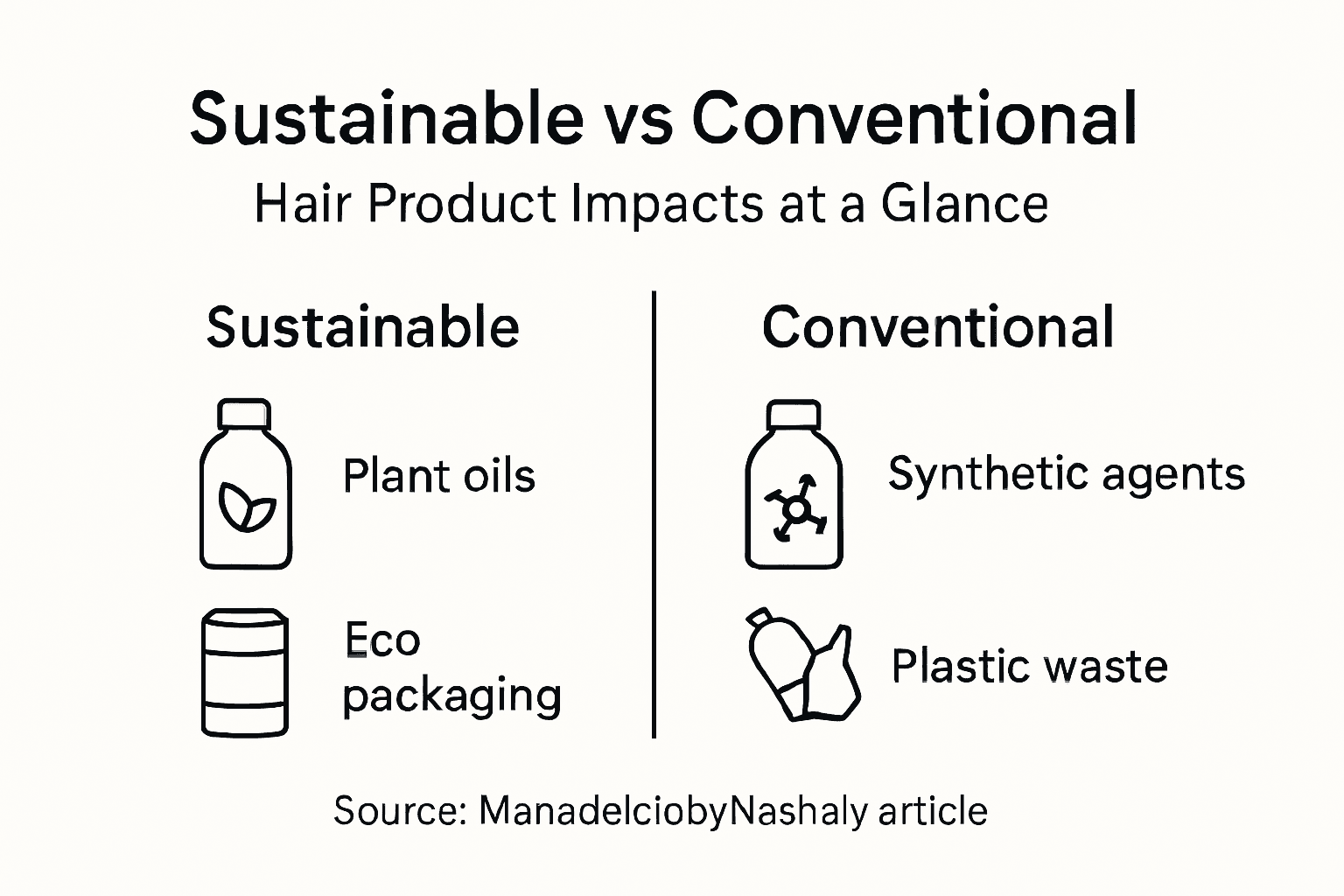
The landscape of hair care formulations reveals a stark contrast between conventional and sustainable approaches. Petrochemical versus bio-based ingredients demonstrate the critical differences in environmental impact and product performance.
Key differences between sustainable and conventional hair care formulas include:
Conventional hair care formulas typically rely on synthetic polymers that provide immediate aesthetic results but carry significant environmental consequences. These products often contain harsh chemicals like sulfates, parabens, and silicones that can damage hair health and persist in ecosystems long after use.
Sustainable formulations represent more than a trend - they’re a fundamental reimagining of personal care’s relationship with the planet.
Sustainable alternatives leverage advanced biochemical technologies to create products that match or exceed the performance of traditional formulations. Natural biosurfactants and biopolymers offer gentle yet effective cleansing and conditioning without the ecological burden of petrochemical ingredients.
The shift towards sustainable hair care reflects a growing consumer awareness of the broader impacts of personal care choices. By selecting products with biodegradable, plant-derived ingredients, individuals can significantly reduce their environmental footprint while maintaining optimal hair health.
Pro tip: Examine product ingredient lists carefully, prioritizing natural, plant-based compounds over synthetic chemical alternatives.
The complex landscape of hair care extends far beyond aesthetic considerations, encompassing profound implications for human health and global ecosystems. Cosmetic chemical health risks reveal the critical interconnections between personal care choices and broader environmental consequences.
Key ethical and health considerations include:
Synthetic hair care products often contain endocrine-disrupting chemicals that can penetrate the human body, potentially causing significant health complications. These substances may interfere with hormonal systems, potentially increasing risks of chronic diseases and reproductive health challenges.
Personal care choices are never just personal - they represent a complex web of environmental and social consequences.
The environmental impact of conventional hair care extends beyond individual usage. Product manufacturing generates substantial plastic waste, contributes to deforestation, and releases harmful chemicals into ecosystems. Moreover, certain communities face disproportionate exposure to toxic ingredients due to systemic marketing practices.
Ethical sustainability in hair care requires a holistic approach that considers human health, environmental preservation, and social justice. This means prioritizing transparent ingredient sourcing, supporting equitable product development, and championing formulations that protect both personal and planetary wellness.
Pro tip: Research product ingredients thoroughly and support brands committed to transparent, ethical manufacturing practices.
Navigating hair care product labels requires careful scrutiny and a comprehensive understanding of potentially harmful ingredients. Hair care product safety guidelines provide critical insights into identifying substances that could compromise both personal health and environmental wellness.
Harmful ingredients to avoid include:
The complexity of chemical ingredient disclosure goes beyond simple label reading. Many manufacturers use technical terminology and obscure chemical names to disguise potentially harmful substances, making consumer education crucial for making informed choices.
Understanding product labels is not just about reading - it’s about decoding a complex chemical language that impacts your health.
Regulatory frameworks have begun addressing these concerns, but consumer vigilance remains the most effective protection. Some ingredients like formaldehyde releasers, phthalates, and mineral oils can cause long-term health complications, ranging from skin irritation to potential endocrine system disruptions.
The global cosmetics industry continues to evolve, with increasing pressure to develop transparent, safe formulations. By understanding what to avoid, consumers can drive meaningful change in product development and prioritize personal and environmental health.
Pro tip: Learn to recognize scientific names of harmful chemicals and download smartphone apps that help decode complex ingredient lists.
The article highlights a critical challenge: finding hair products that nurture your hair and protect the planet at the same time. You deserve hair care that is free from harmful chemicals like sulfates and parabens while delivering deep hydration and shine. At ManadelcielobyNashaly, we understand the importance of natural, plant-based ingredients that support both hair health and environmental stewardship. Our products avoid synthetic additives and focus on organic formulations designed to restore and nourish.
Experience the difference with our range of sustainable, ethical hair care solutions.
Discover our carefully crafted collection today at All Products – ManadelcielobyNashaly. Take action now to make a positive impact on your hair and the world by choosing truly sustainable products from ManadelcielobyNashaly. Your journey toward healthier hair and a healthier planet starts here.
Sustainable hair products are formulated with natural ingredients that prioritize environmental health and personal wellness. They typically avoid harmful synthetic chemicals and focus on biodegradable, eco-friendly alternatives that support ethical sourcing and transparent supply chains.
Sustainable hair products contribute to environmental health by minimizing chemical waste, reducing carbon footprints, and promoting responsible manufacturing practices. They often use renewable plant-based ingredients that decompose naturally, lowering the impact on ecosystems.
Yes, sustainable hair products can be just as effective, if not more so, than conventional hair care alternatives. They leverage powerful plant-based compounds that nourish hair deeply without the use of harsh synthetic chemicals, leading to genuine repair and restoration.
You should avoid ingredients like sulfates, parabens, and synthetic fragrances in hair products. These can cause irritation, hormonal disruption, and allergic reactions, as well as contribute to environmental pollution.
WhatsApp: 347-241-9558


 USD
USD EUR
EUR
 AUD
AUD
 GBP
GBP
 JPY
JPY
 INR
INR