Total: $0.00
Taxes and shipping calculated at checkout


Time to shop! Find your favorite product, check the latest collection & don’t miss out the best discounts!


Natural hair can feel overwhelming when dryness, breakage, and dullness persist despite your efforts. An effective organic hair care routine transforms these challenges into strengths by delivering deep hydration, supporting healthy growth, and restoring natural shine. This guide walks you through understanding your hair type, selecting the right organic products, and building a proven step-by-step routine that works.
| Point | Details |
|---|---|
| Moisture retention is essential for natural hair health | Regular hydration prevents dryness and breakage, supporting overall hair vitality. |
| Protective hairstyles minimize breakage from manipulation | Styles like braids and twists reduce daily stress on hair strands. |
| Regular trims keep hair strong and maintain shape | Removing split ends every 6 to 8 weeks prevents damage from spreading. |
| Hair porosity influences product effectiveness | Understanding porosity helps you choose products that penetrate and moisturize properly. |
| Organic products enhance hydration and growth naturally | Sulfate-free, paraben-free formulas protect hair integrity while delivering nutrients. |
Natural hair encompasses a spectrum of textures from loose waves to tight coils, each with unique characteristics. In the U.S., textures commonly range from type 3 curls to type 4 coils, each requiring tailored approaches to maintain health and vitality.
Hair porosity affects moisture absorption and retention, influencing product choice for natural hair. Porosity describes how readily your hair accepts and holds moisture. Low porosity hair has tightly sealed cuticles that resist moisture entry, medium porosity balances absorption and retention well, and high porosity hair absorbs quickly but struggles to retain moisture due to raised cuticles.
You can assess porosity at home using the float test. Take a clean strand of hair and place it in a glass of water. If it floats, you likely have low porosity. If it sinks slowly, medium porosity. If it sinks immediately, high porosity.
For low porosity hair, select lightweight, water-based products that won’t create buildup on the cuticle surface. Avoid heavy butters and oils that sit on top rather than penetrating. Medium porosity hair handles a wider range of products well. High porosity hair benefits from protein treatments and heavier moisturizers to seal cuticles and lock in hydration.
Knowing your hair type and porosity optimizes every product choice you make, ensuring your hair hydration growth shine goals align with your routine. This foundational knowledge prevents wasted time and money on products that don’t suit your hair’s unique structure.
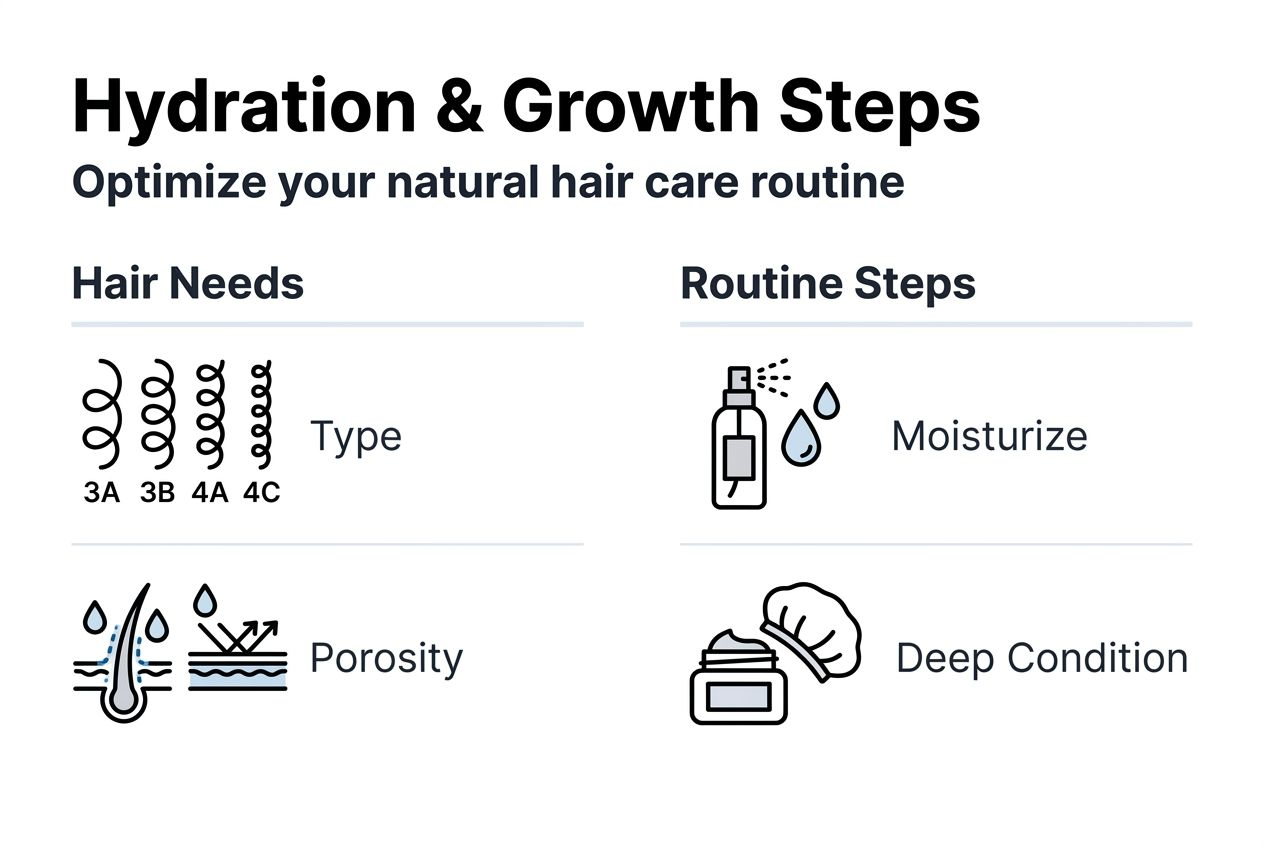
Building an effective organic routine requires specific products and tools designed to support natural hair’s needs. Prioritizing moisture retention is crucial for natural hair care, making your product selection a cornerstone of success.
Must-have organic products include:
Essential tools include:
Deep conditioning weekly with hydrating masks supports moisture retention by allowing nutrients to penetrate the hair shaft deeply. This practice strengthens hair from within, reducing breakage and supporting length retention.

Pro Tip: Choose products free of sulfates, parabens, salt, and silicone to protect your hair’s natural integrity and prevent long-term damage or buildup.
| Product/Tool | Purpose | Usage Frequency |
|---|---|---|
| Hydrating shampoo | Cleanses scalp and hair without harsh stripping | Weekly or bi-weekly |
| Moisturizing conditioner | Detangles and adds moisture | Each wash day |
| Deep conditioning mask | Intensive moisture and protein treatment | Weekly |
| Hair oil | Seals moisture and adds shine | 2-3 times weekly |
| Wide-tooth comb | Gentle detangling | Daily as needed |
| Satin bonnet/scarf | Protects hair overnight | Nightly |
| Spray bottle | Quick moisture refresh | Daily |
Follow this organic hair care routine checklist 6 steps to ensure you have everything needed before starting. Understanding which organic products for curly hair guide work best saves you trial-and-error frustration.
Now that you understand your hair and have the right products, here’s your complete routine broken down by frequency.
Daily routine:
Weekly routine:
Monthly maintenance:
Regular trims every 6 to 8 weeks can help eliminate split ends and maintain shape. Even if you’re growing your hair, trimming quarter-inch removes damage before it travels up the shaft, ultimately supporting length retention.
Pro Tip: Limit heat styling to preserve hair integrity. When you must use heat, always apply a heat protectant and use the lowest effective temperature.
This routine aligns with a comprehensive curly hair care checklist designed for busy individuals who want effective results. Your healthy hair routine checklist hydration growth shine becomes second nature with consistent practice.
Even with the best intentions, certain mistakes can undermine your hair care efforts. Recognizing and correcting them keeps your hair healthy and thriving.
Common mistakes and solutions:
Scientific evidence shows that ingestion of bio-specific hair growth nutraceuticals is associated with significantly enhanced hair shaft diameter and decreased breakage, resulting in longer, stronger hair. While topical care is essential, internal nutrition supports hair from within.
Consistent moisture retention practices form the foundation of successful natural hair care. Without regular hydration, even the best products and techniques cannot deliver lasting results. Make moisture your non-negotiable priority.
Keep your hair hydrated with a hydrating shampoo that cleanses without stripping, setting the stage for every subsequent product to work effectively.
Ready to take your routine to the next level? ManadelcielobyNashaly offers curated organic hair care products specifically formulated to support your hydration, growth, and shine goals.

Our hydrating shampoo cleanses gently while maintaining your hair’s natural moisture balance, free from salt, sulfates, and parabens. Pair it with our hydrating conditioner to smooth cuticles and enhance manageability after every wash. For added shine and strength, our hair oil treatment seals in moisture and protects against environmental stressors.
Pro Tip: Consistent use of quality organic products enhances routine effectiveness, delivering visible improvements in texture, shine, and growth over time. Your hair deserves ingredients that nourish, not harm.
Deep condition weekly with a hydrating mask to retain moisture and keep hair soft and manageable. This intensive treatment penetrates the hair shaft, replenishing nutrients lost through daily styling and environmental exposure. Consistent weekly deep conditioning prevents dryness and brittleness, supporting overall hair health.
Protective hairstyles such as braids or twists reduce manipulation and breakage by tucking ends away and minimizing daily handling. Buns, two-strand twists, and box braids are popular choices that keep hair secure while allowing scalp access for moisturizing. Rotate styles every few weeks to avoid tension on the same areas and maintain healthy edges.
Hair porosity influences moisture absorption and retention, affecting product choice for effective hydration. Try the float test: place a clean strand in water and observe if it floats (low porosity), sinks slowly (medium), or sinks immediately (high). Understanding your porosity helps you select products that penetrate properly instead of sitting on the surface or washing away quickly.
Yes, bio-specific hair growth nutraceuticals significantly improve hair shaft diameter and reduce breakage, supporting longer, stronger hair. These targeted supplements provide nutrients like biotin, vitamins, and minerals that support hair follicle health from within. Always consult a healthcare professional before starting any supplement regimen to ensure safety and appropriateness for your individual needs.
WhatsApp: 347-241-9558


 USD
USD EUR
EUR
 AUD
AUD
 GBP
GBP
 JPY
JPY
 INR
INR