Total: $0.00
Taxes and shipping calculated at checkout


Time to shop! Find your favorite product, check the latest collection & don’t miss out the best discounts!


Damaged hair feels rough, looks dull, and breaks easily. Chemical treatments, heat styling, and environmental stress strip away natural moisture and proteins, leaving your hair lifeless. You want a solution that works without adding more harmful chemicals. This guide shows you how to repair damaged hair using organic methods that restore hydration, improve shine, and rebuild strength. You’ll learn about fermented grapeseed oil, natural hydrators, and simple steps to bring your hair back to life safely and effectively.
| Point | Details |
|---|---|
| Damaged hair loses structure | Chemical treatments disrupt protein bonds and strip moisture, causing fragility and dullness. |
| Fermented grapeseed oil repairs deeply | F-GO penetrates better than regular oils, forming hydrogen bonds that restore hair structure and protect color. |
| Hydration is essential | Sealing the cuticle with natural hydrators improves smoothness, shine, and prevents further damage. |
| Avoid harsh chemicals | Products with sulfates, parabens, and silicones block moisture and weaken hair over time. |
| Consistency brings results | Regular treatments over several weeks restore elasticity and shine naturally. |
Chemical treatments like dyeing, perming, and bleaching damage hair protein structure, accelerating water and lipid loss. Your hair becomes fragile, dry, and prone to breakage. Bleaching causes severe damage to the endocuticle and cell membrane complex, the layers that protect your hair from environmental stress. When these layers erode, moisture escapes quickly, and your hair loses its natural shine.
The cuticle acts as a protective barrier. It controls what enters and exits your hair shaft, maintaining smoothness and gloss. Damaged cuticles lift and crack, exposing the inner cortex to pollutants, UV rays, and further moisture loss. This creates a cycle where damage accelerates over time. Preparing your hair properly before treatment helps natural ingredients penetrate deeply and work effectively.
Start by gently cleansing your hair with a hydrating shampoo that removes buildup without stripping natural oils. Avoid products with sulfates or harsh detergents. Focus on healthy hair care steps that prioritize moisture retention. Detangle carefully using a wide-tooth comb, starting from the ends and working upward to minimize breakage. Skip heat styling tools before treatment, as heat further weakens already compromised hair.
Preparation steps for effective repair:
Proper preparation creates a clean foundation for repair ingredients to absorb effectively. Your hair cuticles open slightly when clean, allowing natural oils and proteins to penetrate and rebuild damaged areas. This step makes a significant difference in treatment outcomes.
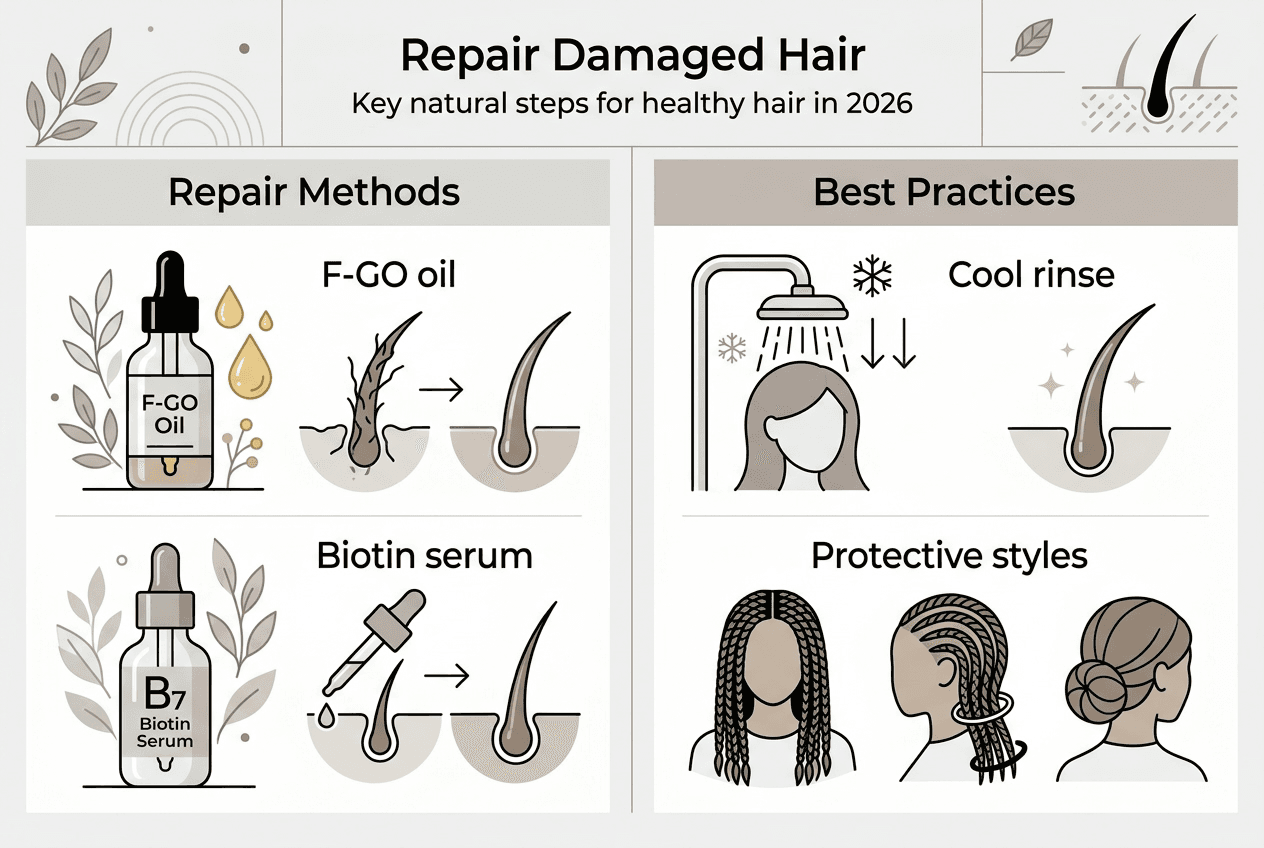
Fermented grapeseed oil repairs chemically damaged hair by enhancing permeability and forming extra hydrogen bonds that strengthen protein structure. Unlike regular grapeseed oil, F-GO undergoes fermentation that breaks down molecules into smaller particles. These particles penetrate deeper into the hair shaft, reaching damaged areas that surface treatments miss. F-GO also acts as an anti-oxygen barrier, protecting hair pigment from fading and preventing further lipid degradation.
Regular grapeseed oil sits mostly on the surface, providing temporary smoothness but limited structural repair. F-GO works differently by actually rebuilding damaged protein bonds inside your hair. This improves mechanical properties like elasticity and tensile strength, making your hair more resilient to daily stress. The fermentation process also creates beneficial compounds that enhance moisture retention and color vibrancy.
Natural hydrators complement F-GO by addressing different aspects of hair health. Biotin strengthens hair follicles and improves thickness. Silica enhances elasticity and reduces surface roughness, creating smoother cuticles that reflect light better. These ingredients work together to restore your hair’s natural shine and softness without synthetic chemicals.

Effects of different oils on damaged hair:
| Treatment Type | Permeability Improvement | Shine Enhancement | Color Protection | | — | — | — | | Fermented grapeseed oil | High (deep penetration) | Excellent (smooth cuticles) | Strong (anti-oxygen barrier) | | Regular grapeseed oil | Moderate (surface level) | Good (temporary coating) | Moderate (limited protection) | | Silicone oil | Low (blocks penetration) | High (artificial coating) | Weak (no structural repair) |
Natural hydrators and their specific benefits:
Pro Tip: Apply F-GO treatments consistently for at least four weeks to see significant structural improvements. Combine with gentle handling techniques like air drying and protective styles to avoid undoing repair progress. Results accumulate over time as your hair rebuilds its natural defenses.
Explore natural hair hydrators for shine and growth to understand how different ingredients target specific damage types. Matching your treatment to your hair’s needs creates faster, more noticeable results.
Repairing damaged hair requires a systematic approach that combines cleansing, treatment, and protection. Follow these steps consistently for best results. Each step builds on the previous one, creating a complete repair cycle that addresses multiple damage factors.
Cleanse gently with hydrating shampoo. Use a sulfate-free formula that removes dirt and buildup without stripping natural oils. Massage your scalp gently to stimulate blood flow, but avoid rough scrubbing that can damage fragile hair. Rinse thoroughly with lukewarm water.
Apply fermented grapeseed oil or repairing treatment. Focus on mid-length to ends where damage concentrates. Work the oil through your hair in sections, ensuring even coverage. Leave it on for 20 to 30 minutes to allow deep penetration. For severely damaged hair, leave it overnight under a silk cap.
Use hydrating conditioner to seal moisture. Apply conditioner after rinsing the oil treatment. This seals the cuticle to prevent damage and lock in hydration. Focus on the ends and avoid applying too much near the roots, which can cause greasiness. Leave on for three to five minutes before rinsing.
Avoid heat styling and harsh chemicals. Let your hair air dry whenever possible. Heat tools disrupt the repair process by evaporating moisture and weakening newly formed protein bonds. Skip chemical treatments like perms or relaxers until your hair fully recovers.
Repeat treatment two to three times per week. Consistency matters more than intensity. Regular treatments over several weeks produce better results than occasional intensive sessions. Track your progress by noting improvements in texture, shine, and manageability.
Comparison of natural repair approaches:
| Approach | Hydration Level | Shine Impact | Long-Term Repair |
|---|---|---|---|
| F-GO treatment | Deep (penetrates shaft) | High (structural smoothness) | Excellent (rebuilds bonds) |
| Regular plant oils | Moderate (surface coating) | Moderate (temporary gloss) | Limited (no structural change) |
| Synthetic silicones | Low (blocks moisture) | High (artificial shine) | None (cosmetic only) |
Pro Tip: Rinse your hair with cool water in the final rinse. Cool water closes the cuticles, locking in moisture and enhancing shine. This simple step makes a noticeable difference in how smooth and glossy your hair looks after treatment.
Learn more about essential hair treatment to restore and hydrate for additional techniques that complement these steps. Combining multiple natural approaches creates synergistic effects that accelerate repair.
Many people unknowingly sabotage their repair efforts by continuing harmful habits. Avoiding these mistakes helps you maintain the progress you’ve made and prevents new damage from occurring.
Excessive heat styling reverses repair progress quickly. Flat irons, curling wands, and blow dryers reach temperatures that break down the protein bonds you’ve worked to rebuild. If you must use heat, apply a heat protectant and use the lowest effective temperature. Better yet, embrace natural textures and air drying methods that preserve your hair’s integrity.
Products containing silicones create a deceptive problem. They coat your hair with a synthetic layer that produces instant shine and smoothness, but this coating blocks moisture from penetrating. Over time, silicone buildup weighs hair down and prevents natural hydrators from working. Avoiding silicones supports natural hair growth and shine by keeping your hair receptive to beneficial ingredients.
Nourishing your scalp matters as much as treating your hair strands. A healthy scalp produces stronger hair from the root. Silica and biotin blends improve elasticity and overall hair health by supporting cellular function. Apply scalp treatments that contain these nutrients to strengthen new hair growth while repairing existing damage.
Common mistakes that undermine hair repair:
Repeated bleaching and chemical exposure weaken hair structure irreversibly, making prevention as important as treatment for long-term hair health.
Pro Tip: Incorporate protective styles like loose braids or buns that reduce mechanical stress from brushing and environmental exposure. Avoid tight hairstyles that pull on your roots and cause tension damage. Protective styling gives your hair a break while repair processes continue working.
Maintaining repaired hair requires ongoing attention to what you put on your hair and how you handle it daily. Small changes in routine create significant differences in long-term hair health and appearance.
Your hair deserves products formulated specifically for deep repair and natural hydration. ManadelcielobyNashaly creates organic hair care solutions that address damaged hair without harsh chemicals. Their formulations focus on restoring moisture, rebuilding protein structure, and enhancing natural shine using ingredients your hair recognizes and absorbs effectively.

Their repairing hair treatment contains fermented grapeseed oil and other natural hydrators that penetrate deeply to rebuild damaged areas. This treatment works on all hair types, providing intensive repair for chemically treated, heat damaged, or environmentally stressed hair. The hydrating shampoo and conditioner set cleanses gently while infusing moisture at every wash. Free from salt, parabens, sulfates, and silicones, these products let your hair breathe and absorb nutrients naturally.
For comprehensive care, the hair restoration hydration and growth kit combines multiple products designed to work together. This kit addresses repair, hydration, and growth simultaneously, giving you a complete system for transforming damaged hair into healthy, shiny strands. Each product supports the others, creating synergistic effects that accelerate visible results.
Most people notice improved texture and shine within two to three weeks of consistent treatment. Significant structural repair takes four to eight weeks as your hair rebuilds protein bonds and restores moisture balance. Severely damaged hair may require three months of regular care to achieve full recovery.
Yes, fermented grapeseed oil works effectively on straight, wavy, curly, and coily hair textures. It’s lightweight enough for fine hair and penetrating enough for thick, coarse hair. People with oily scalps should focus application on mid-length to ends rather than roots.
Hair can recover significantly, but extremely damaged hair may not return to its pre-damage state entirely. Natural treatments rebuild protein structure and restore moisture, improving strength and shine dramatically. Preventing further damage while treating existing issues produces the best long-term results.
Avoid washing hair daily, as this strips natural oils your scalp produces for protection. Skip tight hairstyles that create tension on roots and strands. Minimize sun exposure without protection, and always use a silk or satin pillowcase to reduce friction while sleeping.
Aloe vera provides excellent moisture sealing and scalp soothing properties. Coconut oil reduces protein loss during washing and offers surface protection. Argan oil delivers vitamin E and fatty acids that improve elasticity. Shea butter works well for very dry, coarse hair types needing intensive hydration.
WhatsApp: 347-241-9558


 USD
USD EUR
EUR
 AUD
AUD
 GBP
GBP
 JPY
JPY
 INR
INR